
State and local agencies are under pressure to do more with less. Constituent expectations have shifted and people want digital-first services, faster response times, and transparent access to information. At the same time, most agencies are operating with flat or shrinking budgets, aging infrastructure, and IT teams stretched thin across competing priorities.

What makes this harder is that the problem usually isn’t a lack of tools but a lack of integration between them. Departments end up working in parallel instead of together, data lives in systems that don’t talk to each other, and leadership makes decisions based on reports that are already outdated by the time they’re published.
The agencies making real progress right now aren’t necessarily the ones with the biggest budgets. They’re the ones that have gotten deliberate about how their tools connect to optimize every single dollar and hour.
The Salesforce Ecosystem Gaining Traction in the Public Sector
Salesforce’s foothold in government has expanded well beyond basic case management and constituent tracking. What’s changed is how agencies are approaching the platform as less of a standalone CRM and more as a foundation that other tools can be built around.
That shift matters because it changes the ROI conversation. A single tool solves a single problem. An integrated ecosystem starts to change how an agency actually operates. From our work with state and local clients, three products in particular are driving that kind of broader impact right now: Slack, Tableau, and Agentforce.
None of these are magic bullets. But when they’re implemented with the right architecture and change management behind them, the results are measurable.
Slack for Government Collaboration
The collaboration problem in government isn’t just about slow communication but how information moves (or doesn’t) across departments that were never designed to work together. Email handles point-to-point communication reasonably well. It handles cross-functional, multi-stakeholder coordination poorly.
Slack changes the model. Instead of communication happening in inboxes that only one person can see, it happens in channels organized by project, department, or workstream. For agencies managing long-running programs, complex administrative operations, or mission-critical emergency response operations, that visibility is operationally significant.
What makes the biggest practical difference is automating workflows. It functions as a centralized, always-on resource for the kind of low-stakes questions that quietly eat up staff time. When answers and approvals are automated and available on demand, staff spend less time tracking things down and more time moving work forward.
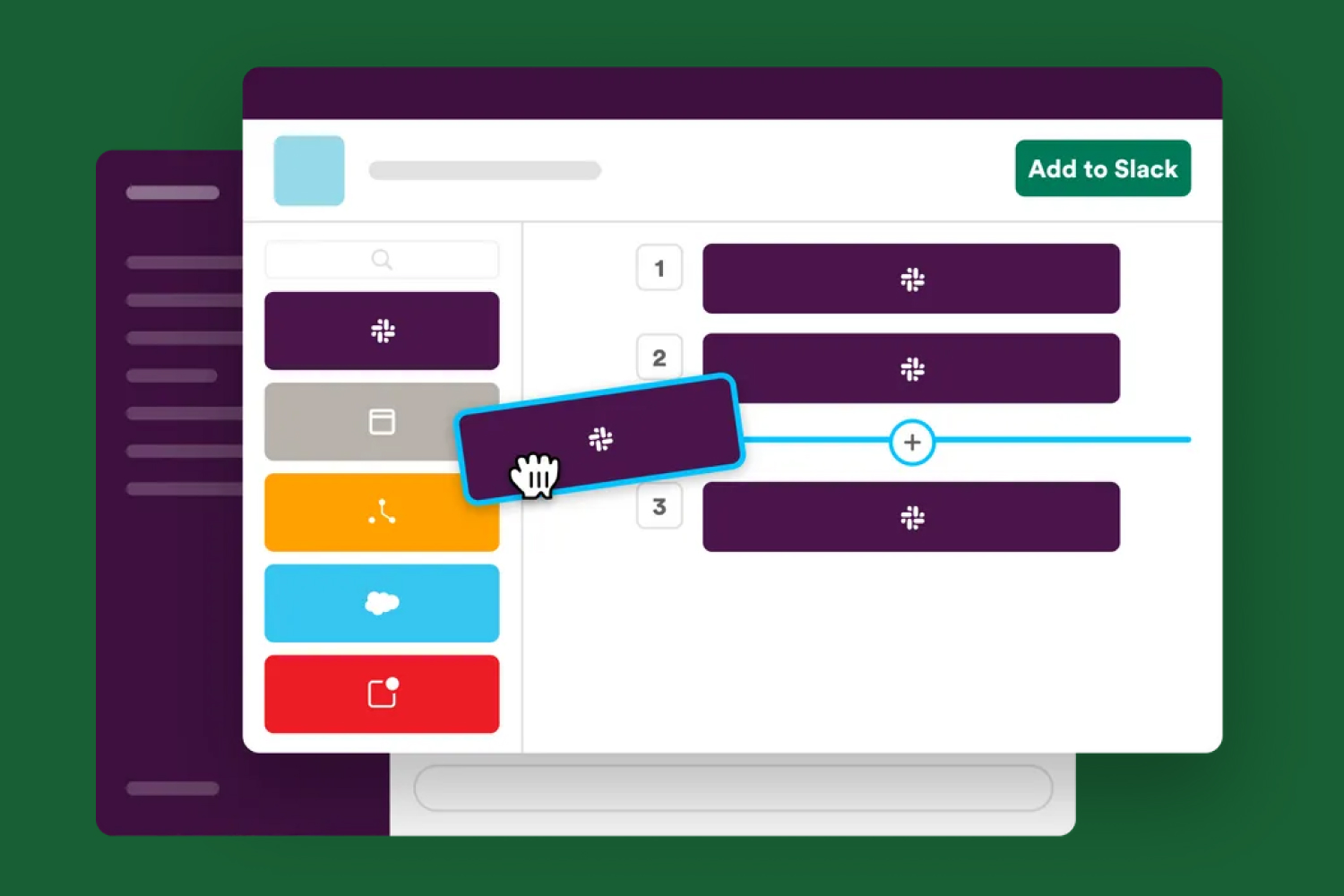
Source: https://slack.com/resources/collections/workflow-builder
Consider a county managing a multi-year infrastructure or community initiative, similar to our work supporting the Keep Arkansas Beautiful Commission. With Slack, each workstream gets its own channel. Field updates post in real time. Finance and legal are looped in automatically when their input is needed, rather than being forwarded into a thread they have to reconstruct. Decision-makers have visibility without being pulled into every conversation, reducing downstream delays and creating a permanent, searchable record.
It’s also worth noting the compliance posture. Slack’s government-tier configuration supports data residency requirements, audit logging, and enterprise-grade access controls which matters when you’re dealing with sensitive internal communications across departments.
Tableau for Data-Driven Decision Making
Most agencies have more data than they know what to do with. The problem is that it’s spread across multiple legacy systems like finance platforms, case management tools, HR systems, and operational databases.
Tableau addresses this by connecting directly to source systems and surfacing data in visual dashboards that update in real time. We’ve seen this completely shift how agencies communicate with oversight bodies. Walking into a legislative briefing with real-time dashboards instead of static reports completely changes the credibility and transparency of the conversation.
To make this data even more actionable for leadership, we leverage Tableau Pulse. Instead of requiring executives to dig through complex dashboards, Tableau Pulse delivers instant executive summaries and AI-powered insights directly to decision-makers. Whether tracking environmental metrics, agency performance, or budgetary health, leadership gets the exact data they need, right when they need it.
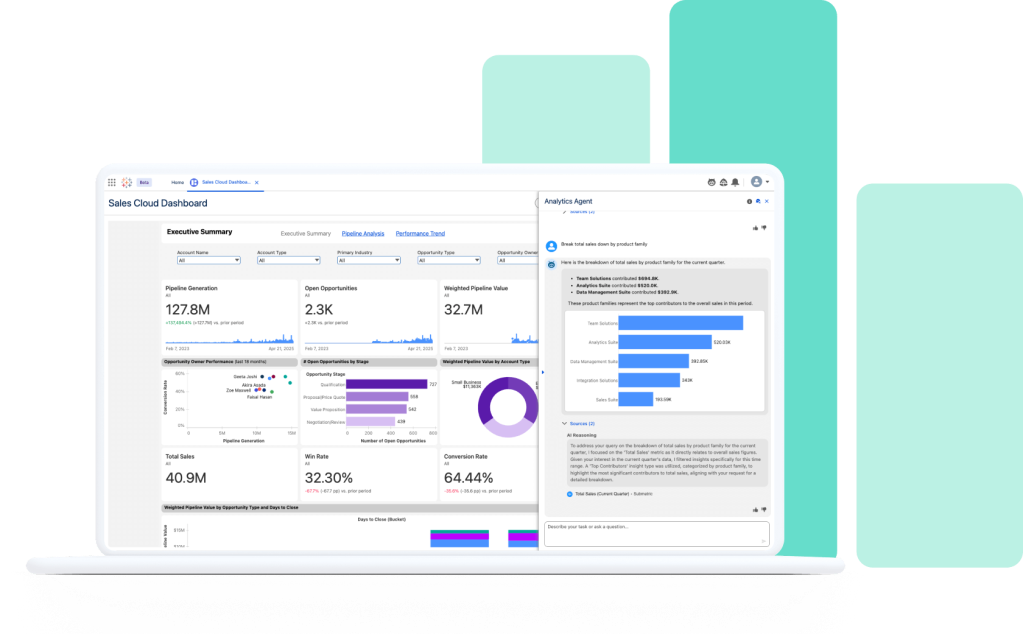
Source: https://www.tableau.com/products/tableau-pulse
What we’ve seen matter most in practice is dashboard governance to make sure the right people are seeing the right data. Tableau integrates directly with Salesforce data, which means agencies can layer in advanced analytics without building a separate, costly data pipeline.
Agentforce for AI-Powered “Digital Labor”
Constituent services are often where agencies feel the heaviest pressure to do more with less. Volume is high, staff capacity is limited, and the public expects quick, accurate answers around the clock.
Agentforce applies AI to this problem, but it shouldn’t be thought of as just another basic, keyword-routing chatbot. Instead, Agentforce functions as true digital labor. Powered by the Atlas Reasoning Engine, these autonomous agents can actually reason, make decisions, and execute multi-step actions based on context, rather than just spitting out canned responses.
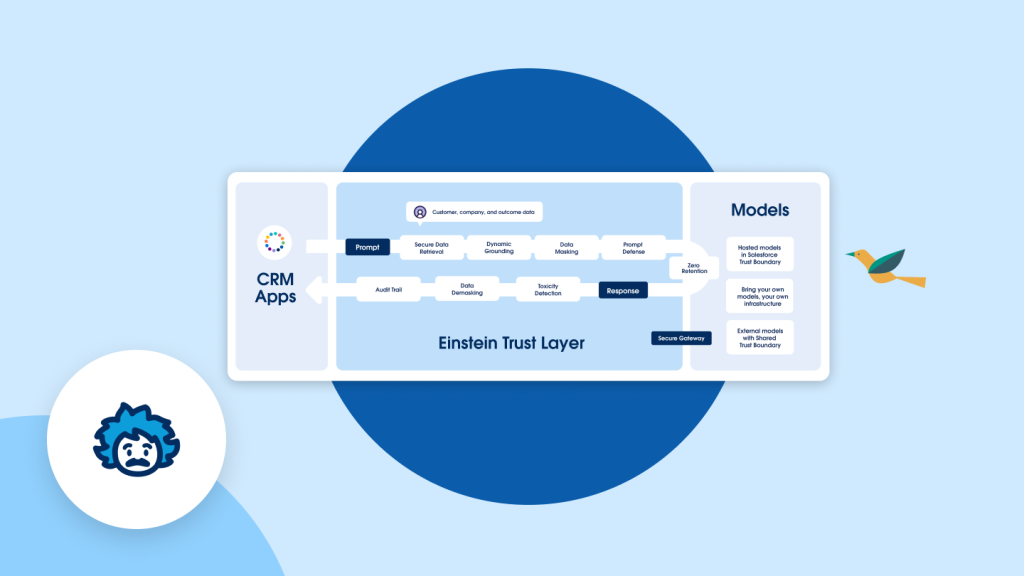
Source: https://www.salesforce.com/agentforce/what-is-a-reasoning-engine/
Our work modernizing public sector workflows, such as complex grants management and permitting processes, routine inquiries like status checks, document requests, and appointment scheduling can be entirely offloaded to digital labor.
When a constituent reaches out about a permit or benefit status, Agentforce securely pulls live case data, reasons through the request, and resolves it automatically. If a case is too complex, it seamlessly routes the interaction to a human staff member with full historical context. This scales agency capacity instantly during high-demand periods (like tax season or emergency events) without requiring additional headcount, allowing human staff to focus on cases requiring true judgment and empathy.
To see how your agency can map out this technology, check out our full Agentforce Roadmap blog.
Key Benefits Agencies Are Seeing from These Tools
Across our public sector engagements, the outcomes that show up consistently are:
- Faster, more organized collaboration: Especially across departments that historically operated in silos.
- Real-time visibility into performance: Leadership works from current data and instant executive summaries, not last quarter’s report.
- Reduced administrative burden: Routine tasks and inquiries are handled by digital labor without major disruption to existing workflows.
- More consistent constituent service: AI-handled interactions are standardized, governed, and available around the clock.
- A platform that scales: These tools grow with the agency rather than becoming obsolete as needs evolve.
Navigating Implementation: Why Partner with Vectr Solutions?
These tools deliver real results, but public sector implementations fail in predictable ways if legacy system integration, data compliance, and user adoption aren’t managed carefully. Technology that people don’t trust or understand simply doesn’t get used.
What truly differentiates Vectr Solutions from general-purpose Salesforce partners is our deep GovCloud and compliance expertise. We don’t just configure software; we design secure, compliant architectures tailored specifically to the stringent data residency, security, and regulatory requirements of public safety and government organizations.
From architecture and legacy integration to hands-on change management and ongoing managed services, we ensure your technology sticks. The tools are good but the outcomes depend entirely on the implementation.