Everyone warned me Dreamforce would be a lot. I’d been told what it was actually like, but I still pictured one giant venue that stretched for miles, with a walkway and a massive Dreamforce sign, where it would take forever to get from one side to the other.
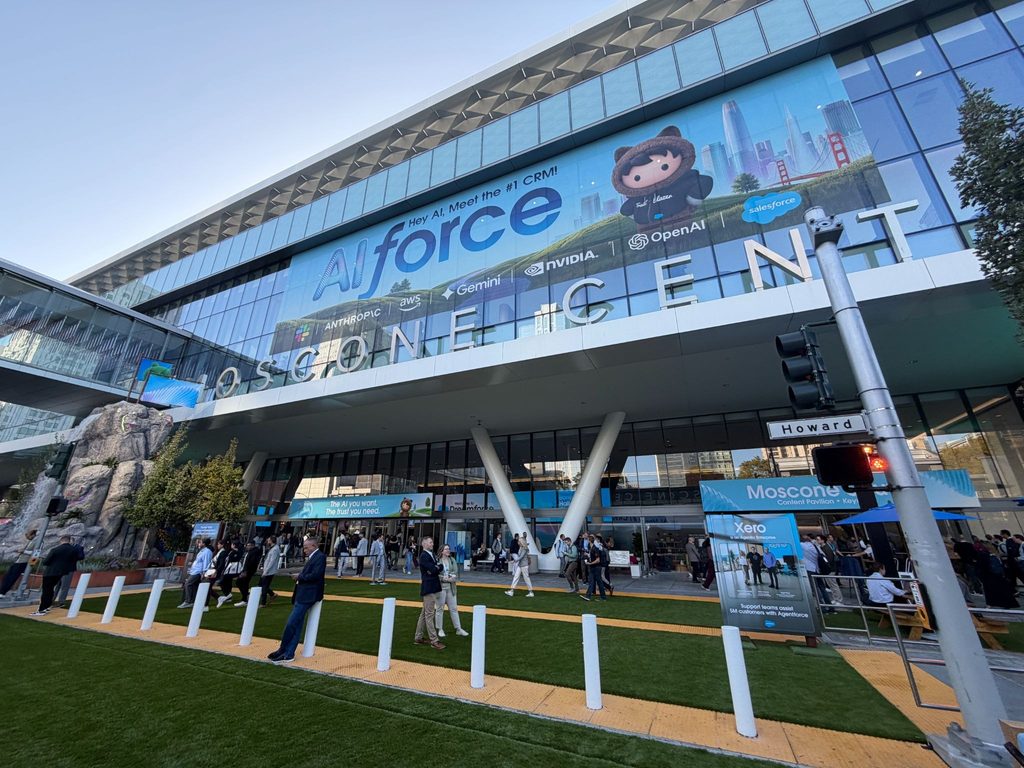
That’s not quite what it is. The first moment I realized it was different was when I saw it wasn’t one building. It was a bunch of them. There’s Moscone North, South, and West, plus everything in between, and the whole neighborhood basically becomes the event.
San Francisco surprised me too. I didn’t really know what to expect from the city. In a couple of ways it felt like New York, and it was chillier than I thought it would be. I’d pictured it being really hot, and it was actually kind of cool.
Walking into Dreamforce itself felt like standing at a huge, busy New York crosswalk. Everyone is packed in and there’s nowhere to really hide. There are flashing lights everywhere, and some sections look like an arcade. Salesforce puts a ton of work into the aesthetics, and you can see partnerships all over the place. Anthropic was one I noticed right away, with a lot of branding around the event.
I went as part of Vectr Solutions’ marketing and business development team and this is what that week looked like from where I was standing.
The Moment I Keep Telling People About
Our speaking session: “Go from AI Pilots to Operational Agentforce”
This was Vectr’s first year speaking at Dreamforce and we covered how a leading nonprofit built an Agentforce roadmap and a phased governance approach to get past disconnected AI pilots and into operational workflows.
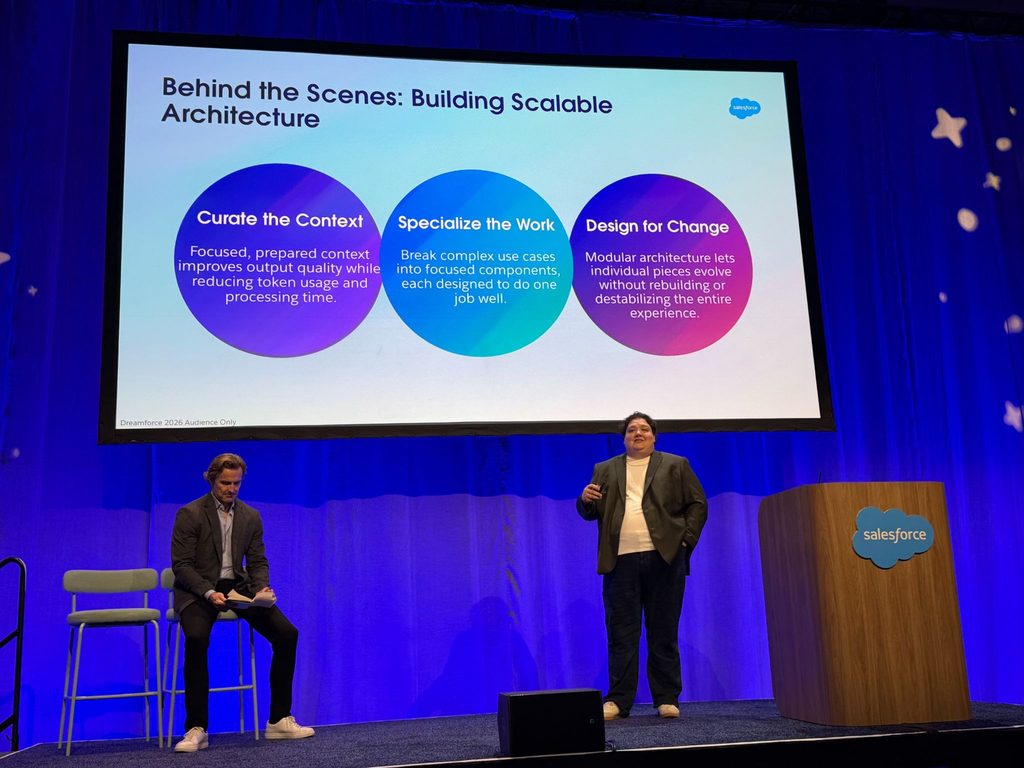
It was surreal. This was literally my first Dreamforce, and I was sitting there watching our team and one of our clients talk about work we did, in a session I’d helped submit. Cal Stock from the team was awesome up there, and I honestly think it went amazing.
What really stuck with me was the natural traffic Dreamforce brings in for you. The event is so big and pulls so many people that the audience kind of finds you. That’s hard to get anywhere else.
The People Who Actually Use Salesforce
I’m not going to name names, but some of the most interesting people I met were at the Carahsoft event. They’re a big reason I like industry events so much.
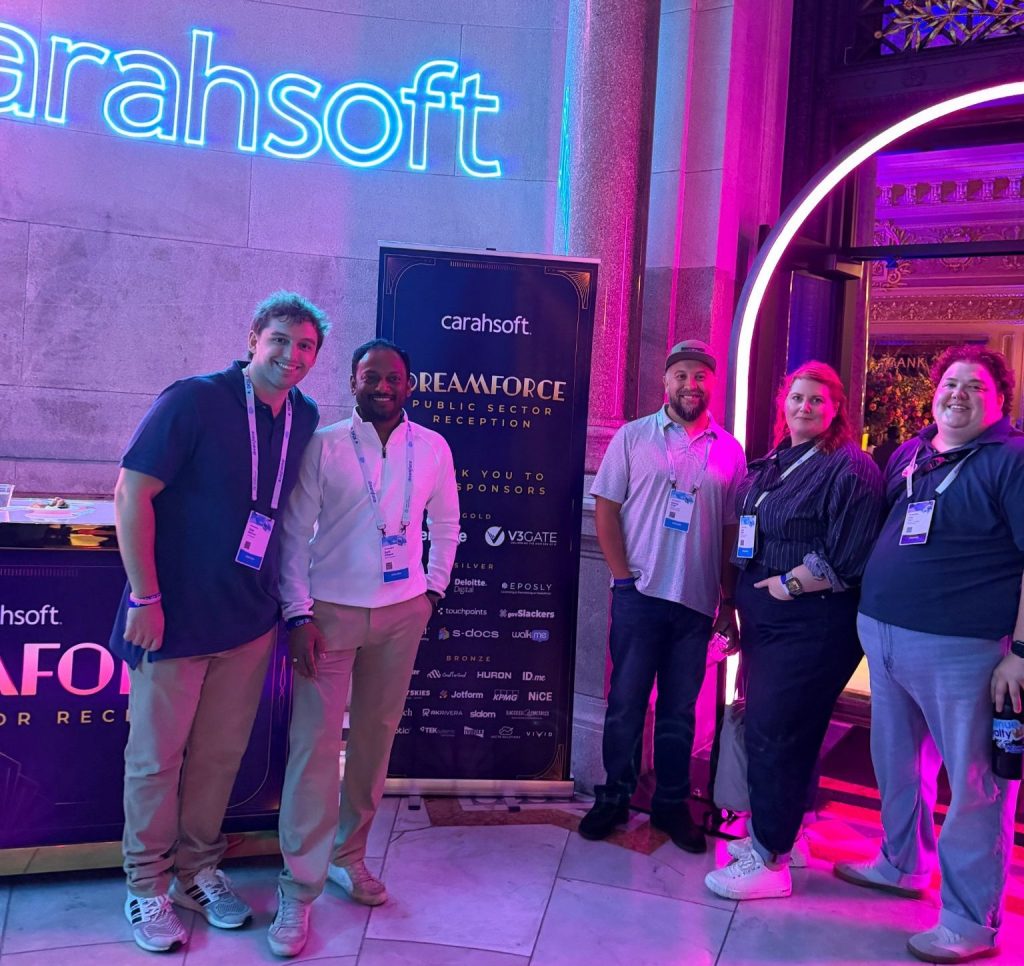
This might sound corny or cliché, but those are the people actually using Salesforce. They aren’t trying to sell Salesforce, and they aren’t trying to get you onto it. They’ve already taken the leap for their company, and they live with it every day.
So you get to hear their real problems and pain points, and to me that’s far more valuable than anything else at the event. You hear what they want, what they care about, and where you might be able to partner with them on things that matter to them.
Even if it doesn’t lead to anything, knowing what they’re dealing with, or having something useful to tell them, is what gets me hungry for more. You get to see who directly benefits from what your company does, and you don’t always get to see that.
With My Marketing Hat On
It’s hard to compare anything to how Salesforce markets itself at Dreamforce, because it’s so big. The event is truly an experience in and of itself. You could show up not caring about Salesforce at all and still have a good time.
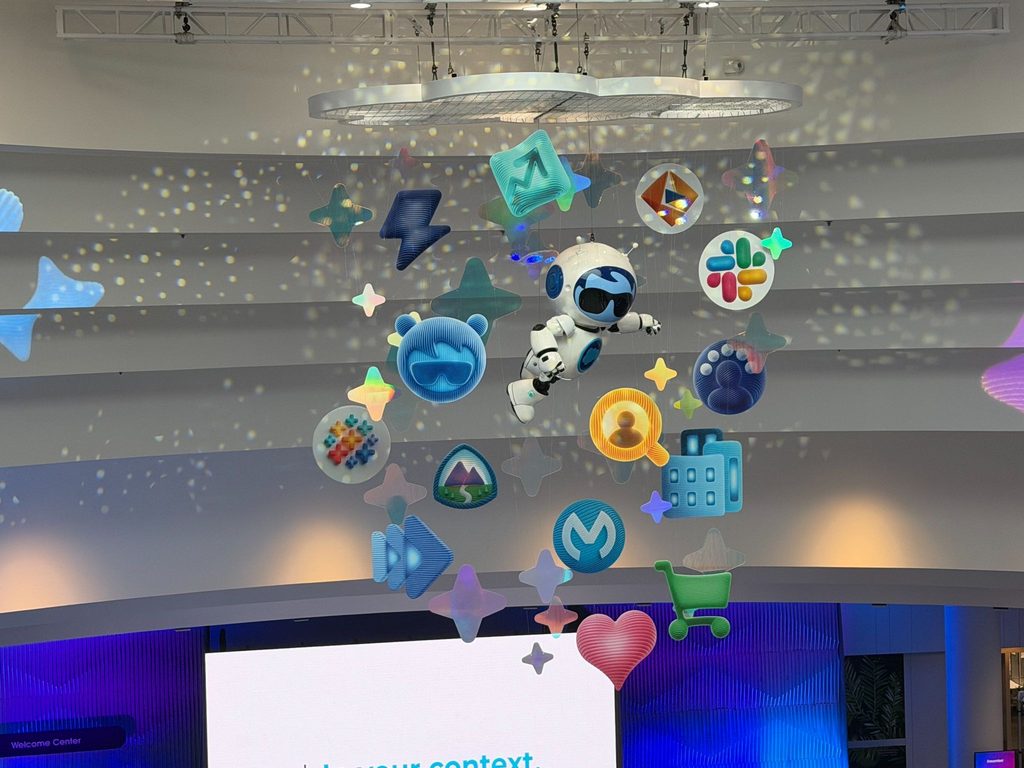
A lot of their customer brands were there, like Crocs, Google, and even some makeup brands. It’s cool because you can connect with any kind of brand and learn how it’s using Salesforce.
Salesforce’s own product teams run giveaways too. They tell you a little about what they’re doing and hand you a piece of swag that makes it worth your time. I came home with so many hats, socks, and stuffies. You name it, I probably have it.
What I took away as a marketer is that they make it fun. The visuals, the sights, even the smells: it’s truly an event before they try to sell you anything. No matter what, you leave with something and you had a good time. That’s a smart way to earn someone’s attention.
With My Business Development Hat On
The conversations with buyers and customers kept coming back to a few things.
Getting the most out of what they already have. Nobody wants to buy a bunch of new tools or spend a lot of extra money to get value they’ve already paid for. People care about getting the full return on the Salesforce investment they’ve already made.
Governing AI. I had a lot of conversations about guardrails. Progress is amazing, but at what point does progress become a problem? People want to know how Salesforce, and the partners implementing it, are keeping AI in check.
What’s new and whether it will make their lives easier. The Claude partnership came up constantly, along with tools like Slackbot, which I really like. At the end of the day, people care about what gives them the best bang for their buck.
Underneath all of that was a more human conversation. People want to make sure they stay part of the process, and that AI supplements them as workers instead of ruining their lives as workers. I had some version of that conversation a lot.
The Hype & What I Actually Believed
Dreamforce is Salesforce’s time to create hype, and it made sense to me that they did.
The biggest announcement was AIforce. It’s a new interface layer that sits above Data 360, Customer 360, and Agentforce, so your data, workflows, and permissions can be used from wherever people already work, not just inside Salesforce. It launched with three pieces. Claudeforce brings Salesforce data, workflows, actions, and governance into Claude, while Slackforce brings CRM intelligence and actions into Slack. Agentforce Coworker is the third, an AI teammate that works inside Salesforce itself.
On top of that there was a naming shuffle. Agentforce Sales went back to being Sales Cloud, Agentforce Marketing went back to Marketing Cloud, and Agentforce Commerce went back to Commerce Cloud. Adding “force” to things and then taking it away again makes it hard to keep up. You kind of have to be glued to the news to stay fully in the know. That’s our job as Salesforce consultants, but I can see why customers get dizzy.
To be honest, a lot of it felt like smoke. Some of the biggest names were early: Claudeforce and Slackforce are in beta, and Koa, Salesforce’s own reasoning model, is still in pilot, with general availability targeted for winter 2026.
Some things did feel real to me, though. Agentforce Coworker is available now. Claude also became the first LLM provider to sit fully inside the Salesforce Trust Boundary. That second one matters because it speaks directly to the governance questions I kept hearing. The useful part isn’t just smarter AI. It’s AI that stays within the permissions and controls your org already has.
I’m still curious how the whole plan fits together. The clearest explanation I’ve heard is that AIforce doesn’t replace Agentforce. Agentforce remains the digital workforce layer, AIforce is an interface layer on top of it, and Claudeforce is one specific surface. I’ll be watching how that plays out for real customers over the next year.
What Was Hard About Going the First Time
It’s always hard to talk to people cold without a reason. That’s where the booths help, because they give you a natural reason to walk up to someone.
You also have to have realistic expectations. You’re not going to walk up to someone at a booth and close a million-dollar deal. What’s valuable is listening and learning, then taking what you heard into a conversation where it actually makes sense.
It’s overwhelming, too. There are so many sections and floors that when you’re not talking to someone, it feels like you’re cheating the experience or doing it wrong. It takes a lot of social energy. On top of the event, we had a lot of dinners and one-off meetups with people we already knew, so you’re learning a ton of names and trying not to miss the important details being thrown at you as you go from one conversation to the next.
I wouldn’t call it awkward, though. Everyone there is going through the same thing to some extent, even the people who’ve done it before.
My advice for someone going next year is something nobody told me: for the most part, nobody there is going to look down on you or judge you for trying. So talk to everybody because you don’t know what could happen.
At the same time, put yourself around people who have goals like yours, so you can bounce ideas off each other and hear what’s working. And don’t be afraid to be the first person to start a conversation. Don’t expect anyone to come get you so go make your own luck.
How it Changed the Way I See Vectr’s Place in the Ecosystem
We’re a virtual company, so it’s easy to lose sight of where you fit in the bigger Salesforce picture. Dreamforce gave me a real visual of what everyone wants out of this, from the customer side and from the partner side. Everyone has their own needs, and everyone brings some kind of value to the equation.
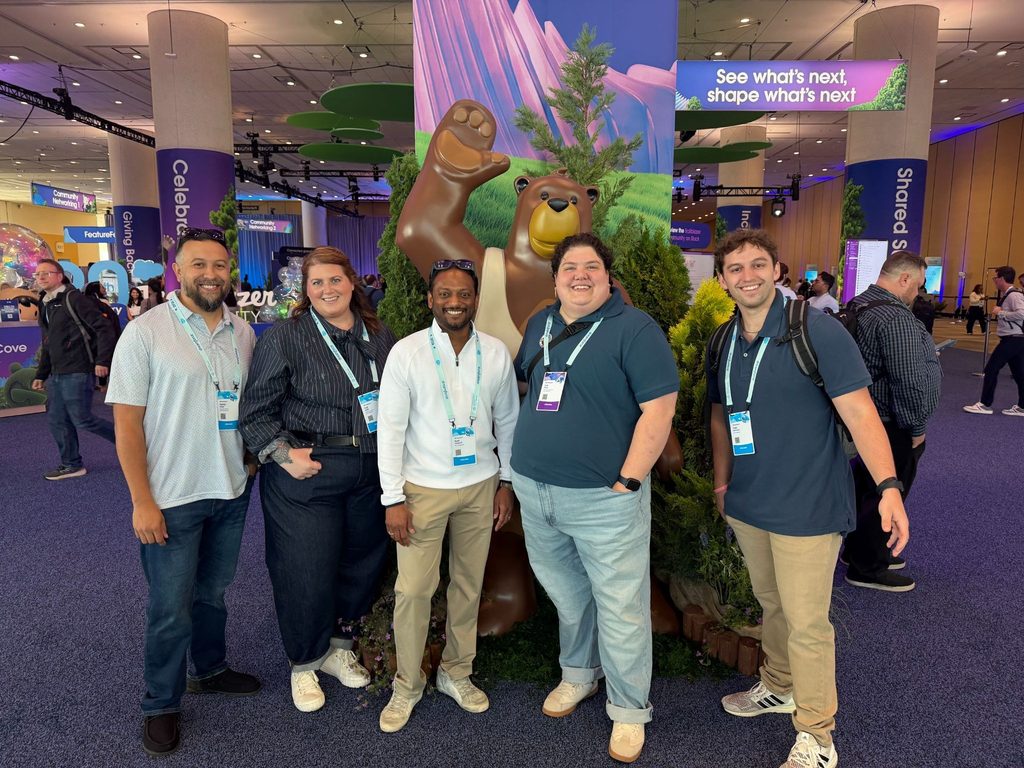
Events like this always give me a better understanding of the product, of the end user, and of where Vectr falls in between. That’s where the ideas come from for serving customers better by helping them get more out of the product.
Mostly, it builds my confidence to have meaningful conversations. The gaps show up on their own when you’re really listening, and that’s how we figure out where to position ourselves to be better.
What I’m Doing Differently Now
Conferences always bring this out of me, but I’m being more assertive with my follow-ups and more intentional about nurturing the relationships I started. It sounds cliché, but it’s true. You want staying power in the conversations you invested your time in, and Dreamforce is a real investment.
We also came home with campaign ideas and most of them tie back to what we’re already good at doing. The difference is that now we’ve heard directly what people need and care about, so we can package and pitch it better.
If I Had to Sum it Up
My honest take is that it’s really not that bad. Everyone makes Dreamforce sound like a daunting exercise designed to push you to your breaking point. If you go about it the right way, give yourself a break here and there, and take it seriously instead of coasting, you’ll meet really cool people by accident. And you’ll learn a lot whether you mean to or not, because nobody is an expert in everything.
The meaningful conversations are happening at events like this. If you want to be part of them, you have to go where they’re happening.
If you want the longer version of all this, Cat Smith (our Director of Transformation & Operations) and I recapped the whole thing!