

AI is no longer just a helpful assistant in Salesforce development. It has become a co-developer capable of planning, reasoning, generating, and deploying application components at a pace that human teams simply cannot match. With the rise of “Vibe Coding”, a term popularized by Andrej Karpathy to describe the shift from writing code to describing intent, the platform has entered a new era.
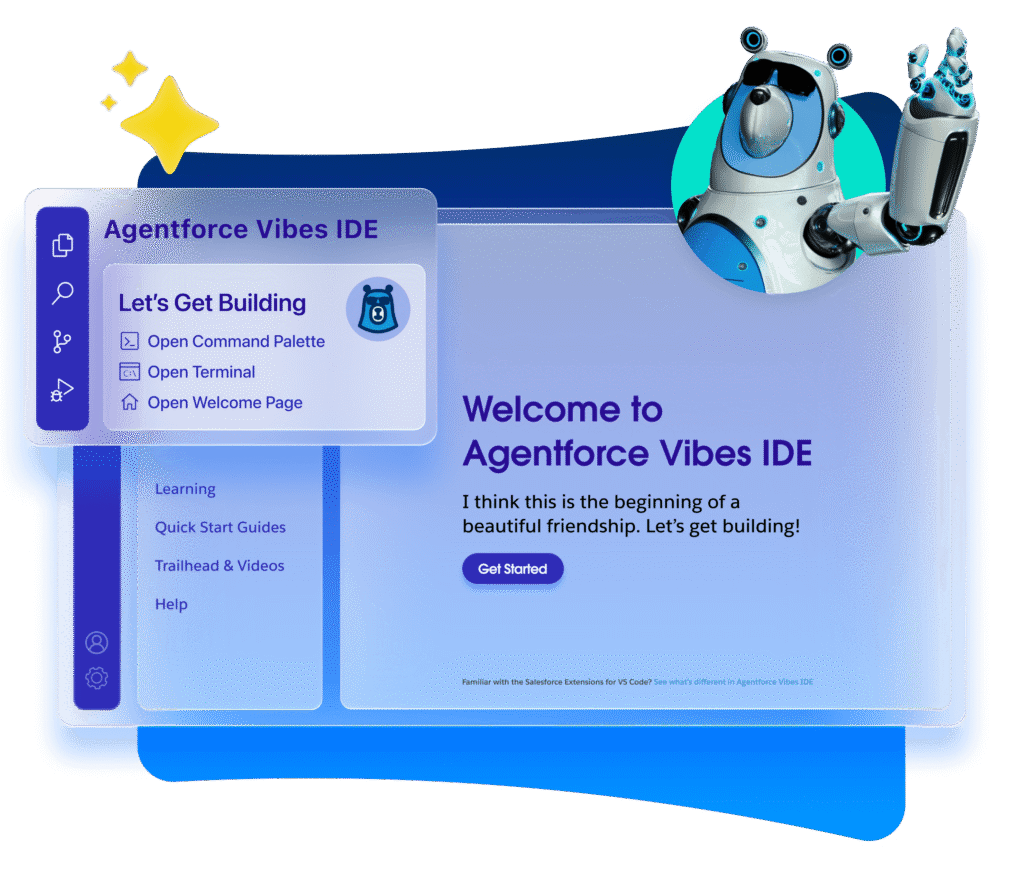
Source: https://www.salesforce.com/agentforce/developers/vibe-coding/guide/
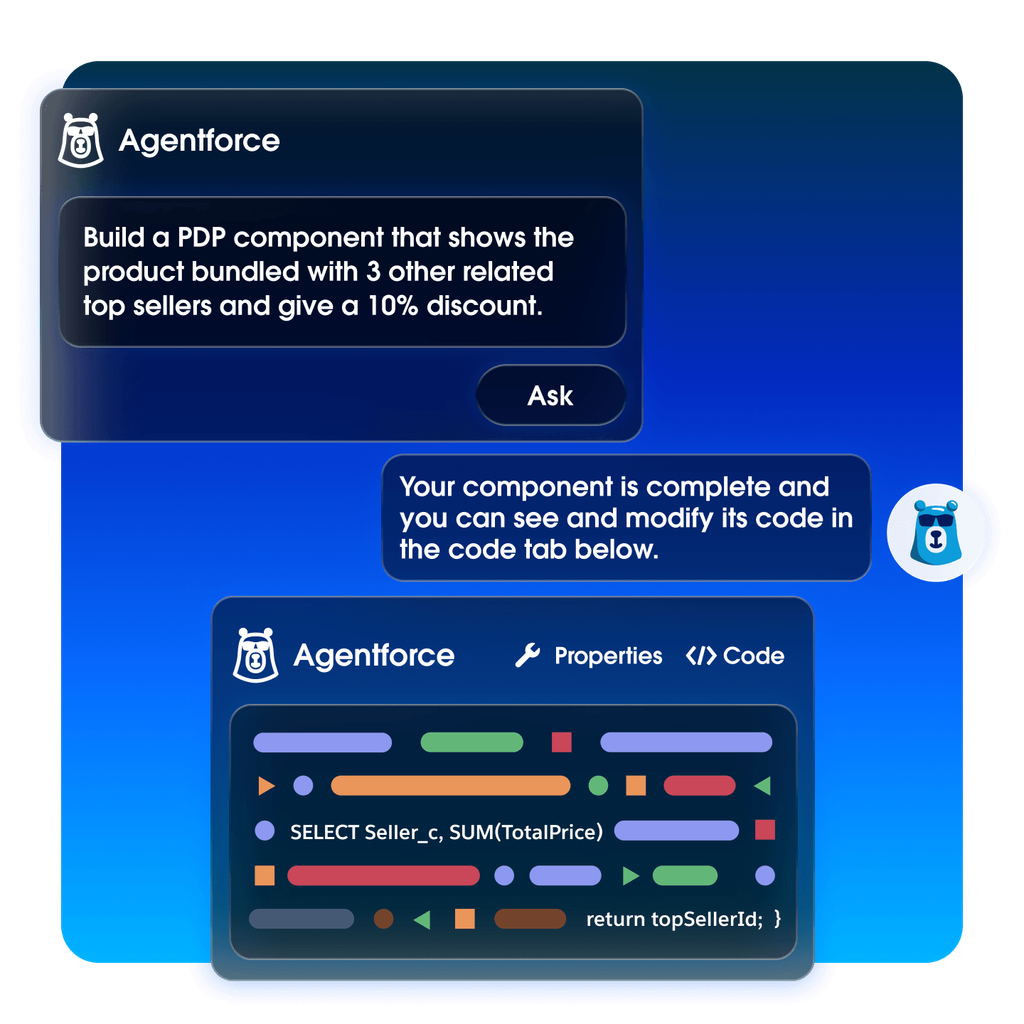
In this paradigm, developers articulate high-level goals in natural language, and Agentic AI, not just a simple autocomplete tool, independently produces the code, metadata, and configuration. The acceleration is extraordinary. But as development becomes conversational, a new organizational challenge emerges: security and quality must now keep pace with machine-speed generation.
A year after Salesforce launched Agentforce Vibes, the tools have changed quickly. Salesforce released Agentforce Vibes 2.0 at TDX in April 2026 with support for several AI models, ended free access for most orgs on June 1, and now limits the browser-based Vibes IDE to sandboxes. Salesforce’s own documentation tells developers to review all generated code before deploying it, because it can be incorrect or insecure. We agree, and we go further: AI should do more of the building, but experienced people still decide what ships. That is the idea behind Vectr’s AI-augmented delivery.
The Agentic Leap: From Assistance to Autonomous Co-Creation
It is important to distinguish between Copilots and Agents. A Copilot suggests the next line of code; an Agent, like Salesforce’s Agentforce Vibes, interprets a requirement, drafts a development plan, and executes the multi-step work required to build a feature.
Source: https://www.salesforce.com/agentforce/developers/vibe-coding/
The developer’s job shifts from builder to director and validator. While the AI handles the heavy lifting of code creation, the human expert remains the sole source of truth for architectural integrity and business logic. The AI “vibes” the code into existence, but the human ensures that code belongs in a production environment.
The Core Risk: AI Produces Apex Without Required Security Controls
After analyzing early Vibe Coding patterns, Vectr Solutions has identified a consistent risk: AI-generated Apex routinely omits CRUD and Field-Level Security (FLS) checks.
Because AI models prioritize “working code” over “governed code,” they often bypass the granular permission checks essential to the Salesforce Trust model. This is where human expertise is non-negotiable. An AI might build a functioning “Update Record” button in seconds, but a human expert knows that without explicit security checks, that button is a compliance liability.
Where the Human Expert Still Matters
“Vibe Coding” isn’t a product feature, it’s a methodology. To manage it, organizations must adopt a new discipline: The AI Output Auditor.
This isn’t a new tool; it is a specialized role for senior developers and architects. As the AI takes over the “writing,” the human expert shifts their focus to high-level validation. The Auditor’s mandate is to ensure:
- Intent: Making sure requirements are complete and clear before AI builds anything. Vague requirements cost more now, because AI builds the wrong thing quickly.
- Design: Approving the data model, automations, and integrations before any build starts.
- Security: Enforcing proper CRUD/FLS checks that AI often ignores.
- Efficiency: Verifying that logic is bulkified and adheres to Salesforce Governor Limits.
- Context: Ensuring the AI isn’t “hallucinating” a solution that conflicts with existing complex business logic or technical debt.
- Acceptance: Confirming each feature against its acceptance criteria with the customer and owning the result. AI does not answer to the customer. We do.
In practice, a person signs off at three points: before the build starts, before code leaves a developer’s sandbox, and before a feature is accepted. AI drafts, builds, and tests in between, but it does not make those calls.
Who Decides?
Select a step to see what AI handles and where our team makes the call.
-
Step 1Intent
Step 1: Intent
- AI does:
- Drafts requirements and questions from discovery notes.
- Our team decides:
- Our analysts and architects confirm the requirements are complete and match what the business meant.
- If skipped:
- AI builds the wrong thing, quickly.
-
Step 2Design Sign-off
Step 2: Design
- AI does:
- Drafts the data model, automations, and integration plan.
- Our team decides:
- An architect approves the design before any build starts.
- If skipped:
- The build doesn’t fit the existing org and breaks what’s already there.
-
Step 3Build
Step 3: Build
- AI does:
- Writes code, configuration, and tests against the approved design.
- Our team decides:
- Our developers direct the work and check output as it comes in.
- If skipped:
- Code that works in a demo but fails at scale.
-
Step 4Review Sign-off
Step 4: Review
- AI does:
- Runs tests and flags issues.
- Our team decides:
- Our developers and architects confirm permission checks, platform limits, and fit with existing business logic before code leaves the developer’s sandbox.
- If skipped:
- Missing security checks reach users. A compliance problem, not a bug.
-
Step 5Accept Sign-off
Step 5: Accept
- AI does:
- Prepares demos and documentation.
- Our team decides:
- Confirms each feature against acceptance criteria with the customer.
- If skipped:
- No one owns the result. AI doesn’t answer to the customer. Our team does.
Speed comes from AI. Correctness comes from our architects.
How Vectr’s AI-augmented delivery keeps architects in charge.
See our delivery methodology.The Metadata Advantage: Now the Starting Point
A common critique of AI is its tendency to "guess" at data structures. This is where Agentforce Vibes first stood out from general-purpose coding tools.
Because Agentforce Vibes is baked into the Salesforce platform, it has Total Metadata Awareness. It doesn’t just know how to write Apex; it understands your specific org like your custom objects, your unique field relationships, and your existing flows.
For a services team like ours, this is a real gain. It means the AI isn't just writing generic code; it’s writing code that is contextually aware of your enterprise architecture. This reduces "schema drift" and ensures that the AI-generated components actually fit into your ecosystem without breaking existing dependencies.
That advantage no longer belongs to one tool. Salesforce now publishes MCP servers that give other AI coding tools the same view of an org’s metadata, so knowing your schema is now the starting point. What AI still cannot see is the gap between what your org contains and what your business intended. Closing that gap is the job of the people who ran discovery, which is why at Vectr the process around the tool matters more than the tool.
Building Governance for Vibe Coding
Even with metadata awareness, velocity must never outpace security. At Vectr Solutions, we hold our own delivery to the same five pillars we recommend to customers:
Data Security
The first priority is addressing the well-documented tendency of AI to omit CRUD and FLS checks. Ensuring that all data interactions enforce proper permissions requires both tooling and human oversight. Automated static analysis catches predictable patterns, while auditors verify nuanced scenarios. No code should reach production unless these controls are fully enforced.
Maintainability and Traceability
With AI generating so much code so quickly, organizations must put structures in place to understand, track, and audit the origin of every component. This includes storing prompts alongside code artifacts, capturing early AI drafts, and maintaining clear ownership assignments. Development becomes more accessible, but accountability must remain explicit.
In our delivery model, documentation comes before the build, not after it. Build does not start until an architect has approved a complete specification, and that specification is updated every time the build changes.
Performance and Scale
AI can generate solutions that work correctly but fail under scale because of issues like “unbulkified” logic or operations inside loops. Sandboxing, performance checks, and required testing patterns help maintain reliability as orgs evolve.
In our delivery model, developers write unit and automated functional tests as part of the build, and a story is not done until those tests pass.
Team Capability and Expertise
A subtle but important risk emerges when developers rely too heavily on AI. Teams must continue to understand platform constraints, core design patterns, and the implications of architectural choices. Vibe Coding does not eliminate the need for expertise. It shifts that expertise into governance, architecture, and strategic oversight. That is why senior architects lead Vectr engagements.
Transparency With Customers
We are open with customers about how AI is used in our delivery. When compliance rules or a customer’s preference rule out AI tooling, we can scope the work under a traditional model instead.
What This Means for Salesforce Technology Leaders
Vibe coding changes how Salesforce applications get built, and how the firms that build them deliver. Salesforce’s own professional services teams are moving to AI-led delivery, and so are its partners. For buyers, the question is no longer whether a partner uses AI. It is who checks the work.
Organizations that embrace Vibe Coding without governance will face avoidable compliance, performance, and maintainability challenges. Those that build discipline early will unlock dramatic acceleration.
Leadership teams should treat Vibe Coding as the new standard for development while elevating senior staff into strategy, auditing, and architectural oversight. Establishing the AI Output Auditor role ensures that every AI-generated artifact—no matter how quickly it’s created—meets your organization’s expectations for quality and security.
This, paired with governance policies in your DevOps process and a CI/CD pipeline aligned to new AI-driven workflows, forms a resilient foundation for safe scale.
Partnering with Vectr Solutions for AI-Augmented Delivery
Vectr Solutions is a services company, and the checkpoints and pillars above are how we approach delivery. We call it AI-augmented delivery: the same phases our customers already know, with our architects leading the engagement and AI speeding up the work they direct. Our teams design tailored governance frameworks, implement review and audit workflows, strengthen data security, and build readiness plans that protect both speed and trust. To see how it works on a real project, explore our delivery methodology or talk with our team.
Vibe Coding is powerful. With the right guardrails, it becomes a differentiator. Without them, it becomes a liability.
- The future of Salesforce development is conversational.
- The future of governance is intentional.
- Both are essential for what comes next.