
Key Takeaways
- Claudeforce, Slackforce, and Agentforce Coworker are three surfaces Salesforce grouped under AIforce at Dreamforce. Each is a different place your team can work with Salesforce data.
- Which model reasons behind your agents is a separate decision that sits underneath all three. Claude is now the default in several Salesforce products, Salesforce’s new Koa model is in pilot, and other models remain selectable.
- Treating these surfaces as competitors misses the point. The real decision is which surface fits a given workflow, not which brand wins.
- For regulated organizations, that decision touches audit trails, Government Cloud boundaries, and who can see what, not just user preference.
- Vectr Solutions helps public sector agencies and government contractors map specific workflows to the right surface before the build starts, not after.
Since Dreamforce, we’ve heard a version of the same question from a few different clients: should we be building our agents in Claudeforce or Slackforce?
It’s a fair question to ask after a keynote full of new names. But it’s also the wrong question.
Claudeforce and Slackforce are two doors into the same room: your Salesforce data. Agentforce Coworker is a third, and Salesforce grouped all three under a new umbrella called AIforce. Most organizations will end up using more than one door, for different reasons, on different parts of the same project.
Underneath all three sits a separate question about which AI model does the reasoning. Before we get to either decision, it’s worth understanding what each one actually does.
Claudeforce vs. Slackforce vs. Agentforce Coworker at a Glance
| Surface | Where you work | Best for |
| Claudeforce | Inside Claude | Sellers prepping calls and reviewing pipeline |
| Slackforce | Inside Slack | Quick, shared answers where teams already talk |
| Agentforce Coworker | Inside Salesforce (Lightning search bar), plus Slack, Teams, and mobile | Asking questions and taking action on records without leaving Salesforce |
What Is Claudeforce?
Claudeforce is the name for a partnership between Salesforce and Anthropic, the company behind the Claude AI models.
Its headline product is Salesforce in Claude:
- A plugin that brings your accounts, opportunities, and pipeline directly into Claude
- 37 prebuilt sales skills for things like meeting prep, pipeline review, and record updates
- Launched in open beta at Dreamforce
- Requires two admins: a Salesforce admin requests access and configures the connection, then a Claude organization owner rolls it out to users
- Currently limited to organizations on the latest Sales Cloud Enterprise edition
- Users only see what their existing Salesforce permissions already allow
For regulated organizations, that permission model is the first thing to review.
Because the plugin inherits Salesforce access rather than creating a new access model, it’s only as tight as the permissions you already have. If your profiles and permission sets have drifted over the years, Claudeforce will surface that drift quickly.
It’s also still a beta, which most public sector security teams will want to treat accordingly.
Claude or Koa: Which Model Does the Thinking?
Every Agentforce agent runs on a reasoning model: the part of the system that reads a request, decides what steps to take, and figures out how to respond.
Historically, Salesforce relied on outside frontier model providers for that reasoning. Today there are two names to know:
- Claude has been an option since late 2025, running through Amazon Bedrock inside what Salesforce calls its Trust Boundary. Under Claudeforce, Claude is now the default model behind Agentforce Vibes and Agentforce Coworker.
- Koa is Salesforce’s first reasoning model of its own, introduced at Dreamforce. It’s built with NVIDIA and tuned specifically for CRM work. Koa is currently in pilot, with general availability targeted for this winter.
The Trust Boundary means the request and the data involved don’t leave the security perimeter Salesforce customers already operate inside. The model doing the thinking changes. Where the data lives and who can access it does not.
So which model should you choose?
The honest answer is that it depends on the workflow. Right now, most teams don’t have enough real-world comparison to know which model performs better for their specific use case. With Koa still in pilot, that comparison isn’t even possible for most organizations yet.
What they can evaluate now is the security posture, since that’s documented and reviewable today. Performance comparisons will take longer to settle. Security posture is a reasonable place to start.
What Is Slackforce?
Slackforce is rolling out now, and some features are still in beta. It’s the second surface. Like Claudeforce, it’s about where a person works with Salesforce data, not which model is reasoning behind the scenes.
For most of its history, Slack has been a messaging tool that sits next to Salesforce, not inside it. Slackforce changes that relationship. Salesforce is now positioning Slack as the main place employees interact with Salesforce data directly, instead of opening a separate report, dashboard, or record.
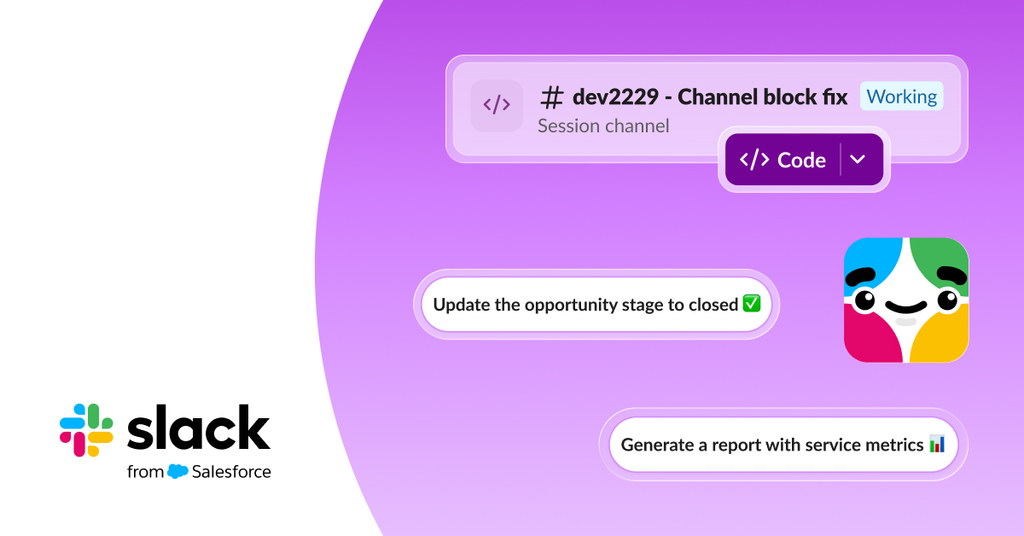
The mechanism behind this is Slackbot, the assistant already built into Slack. It can now understand a plain-language request like “show me this month’s open cases by region” and generate a live view right inside the channel where the question was asked.
What’s a Slackforce Surface?
Salesforce calls that live view a Slackforce Surface. The name sounds more complicated than the idea:
- It’s a dashboard that stays connected to the underlying data instead of being a static image
- A team can filter it, comment on it, and keep coming back to it
- No one has to rebuild it or export it again
Pin it to a channel, and it behaves less like a report someone sent once and more like a shared, living view of whatever it’s tracking.
What it means for GovSlack agencies
For agencies running GovSlack, the version of Slack built for public sector security requirements, Slackforce is worth watching, though Salesforce hasn’t announced when it will reach GovSlack. Some underlying Slack capabilities aren’t yet supported in the GovSlack environment, so agencies should confirm availability before planning around it.
If and when it arrives, it will change daily habits more than any single project. Instead of training staff to check a dashboard in Salesforce once a day, the same information starts showing up where people are already talking to each other about the work.
What Is Agentforce Coworker?
The third surface is Agentforce Coworker, an AI teammate that lives in the Salesforce search bar inside Lightning. You ask it a question in plain language, like “what’s important for me today,” and it reasons across your accounts, activity, and history, then takes action on records. When a task needs more specialized help, it hands off to purpose-built agents.
Coworker first launched in May and became part of AIforce at Dreamforce. It’s also the only one of the three surfaces that’s generally available today. It starts in Lightning but extends to Slack, Microsoft Teams, and mobile. For teams that spend their day in Salesforce, it keeps the conversation right next to the records it touches.
Why “Which One Is Better” Isn’t the Right Frame
Once you see what each one actually does, the “versus” framing stops making sense.
Claudeforce, Slackforce, and Coworker all sit at the same layer: they’re all places a person talks to Salesforce. Structured, autonomous work happens somewhere else, in Agentforce agents built to run a defined process. The model choice sits at a third layer underneath all of it.
What it does have to answer is a more specific question:
Does this task belong in a conversational surface where a person is actively working, or embedded in a structured process where the agent runs largely on its own?
Where Structured Processes Belong
Some of the work regulated organizations do doesn’t benefit from a conversation.
A case management workflow that checks eligibility, routes a form, and updates a record doesn’t need a Slack channel. It needs to run inside the system of record, with clear logging of every step, because an auditor may ask about that step six months later.
These are the workflows where the agent should live close to the data it touches. That means an Agentforce agent running inside Salesforce itself, either one built in Agent Builder or one of the new prebuilt agents Salesforce released at Dreamforce. The reasoning model should be chosen based on security review rather than convenience.
That’s the same compliance standard we held for a defense manufacturing client, where a secure sales pipeline needed to hold up under scrutiny from both the customer and their own compliance team, not just work well on a demo day.
Where Conversation Belongs
Other work is the opposite. Think of:
- A team lead trying to understand why a queue backed up
- A program manager who wants a quick read on this week’s numbers before a meeting
- A seller prepping for a call or reviewing pipeline
None of them want to open a report builder. They want to ask a question and get an answer where they’re already working.
This is where the three AIforce surfaces earn their place. A Slackforce Surface is fast, shared, and visible to the people who need to act on it together. For someone who already spends their day in Claude, Claudeforce keeps that work in one place. For someone who lives in Salesforce, Coworker answers the question without opening a report builder.
The Governance Question Sits Above All Three
Wherever an agent lives, Mulesoft Agent Fabric is the layer that keeps track of:
- What the agent is doing
- Which model it’s using
- What it’s allowed to touch
We covered Agent Fabric in more depth back in June, and the short version still applies here: the surface a person sees is not the same as the governance layer watching everything underneath it. A well-built Agentforce roadmap accounts for both, rather than treating the interface as the whole decision.
Why This Is the Question We Get Asked
This is a decision we walk clients through often, and after Dreamforce, it’s the one we’re hearing most. The pattern is consistent:
- Teams that pick a surface based on which announcement got more attention end up rebuilding later.
- Teams that start by mapping the actual workflow (who touches it, what needs to be logged, and where the people doing the work already are) tend to get it right the first time.
That mapping work is where Vectr Solutions spends most of its time with public sector and government contractor clients, well before anyone opens Agent Builder.
Getting the Architecture Right Before You Build
If your team is weighing where a specific Agentforce use case should live, it’s worth thinking through before the build starts. Vectr Solutions works with public sector agencies and government contractors on Salesforce under real compliance pressure, and we’re happy to talk through what these new options could mean for your environment.
Reach out to Vectr Solutions, to start the conversation.