
When state and local government leaders plan their digital roadmaps, they often design their IT strategy around the org chart.
They buy one system to manage environmental volunteers, a different database to issue hunting licenses, and a third tool to track park inspections.
That approach is expensive, but the bigger cost is operational. State employees end up acting as human data-integrators: copying names between systems, reconciling spreadsheets, and chasing paper trails. Running a modern public service this way is like working with your hands tied behind your back.

Citizens, volunteers, and game wardens don’t care about internal agency divisions. Operationally, most of these programs are field operations in disguise.
Whether you’re sending volunteers to clean a highway or an officer to verify a commercial boating permit, the work runs on the same mechanics:
- Constituent intake: self-service portals for applications and reporting
- Scheduling and assignments: matching people, territories, and shifts
- Mobile field access: checklists and data workers can use in the field
- Inspections and enforcement: logging compliance, safety tasks, and violations
When agencies stop building isolated programs and start managing shared field operations, they can scale without buying a new system for every department. Here’s what that looks like on Salesforce.
Managing Community-Based Field Work
Volunteer programs are often run out of spreadsheets as an administrative side project. In practice, volunteers are a distributed field workforce, and managing them that way lets agencies grow community impact without growing staff.
With Salesforce Field Service and Agentforce, agencies can take event and volunteer requests through a public form, turn them into cases automatically, and schedule people based on skills, availability, and location. Agentforce handles confirmations and reminders, summarizes event reports, and processes photos and event logs, so coordinators spend less time on follow-up.
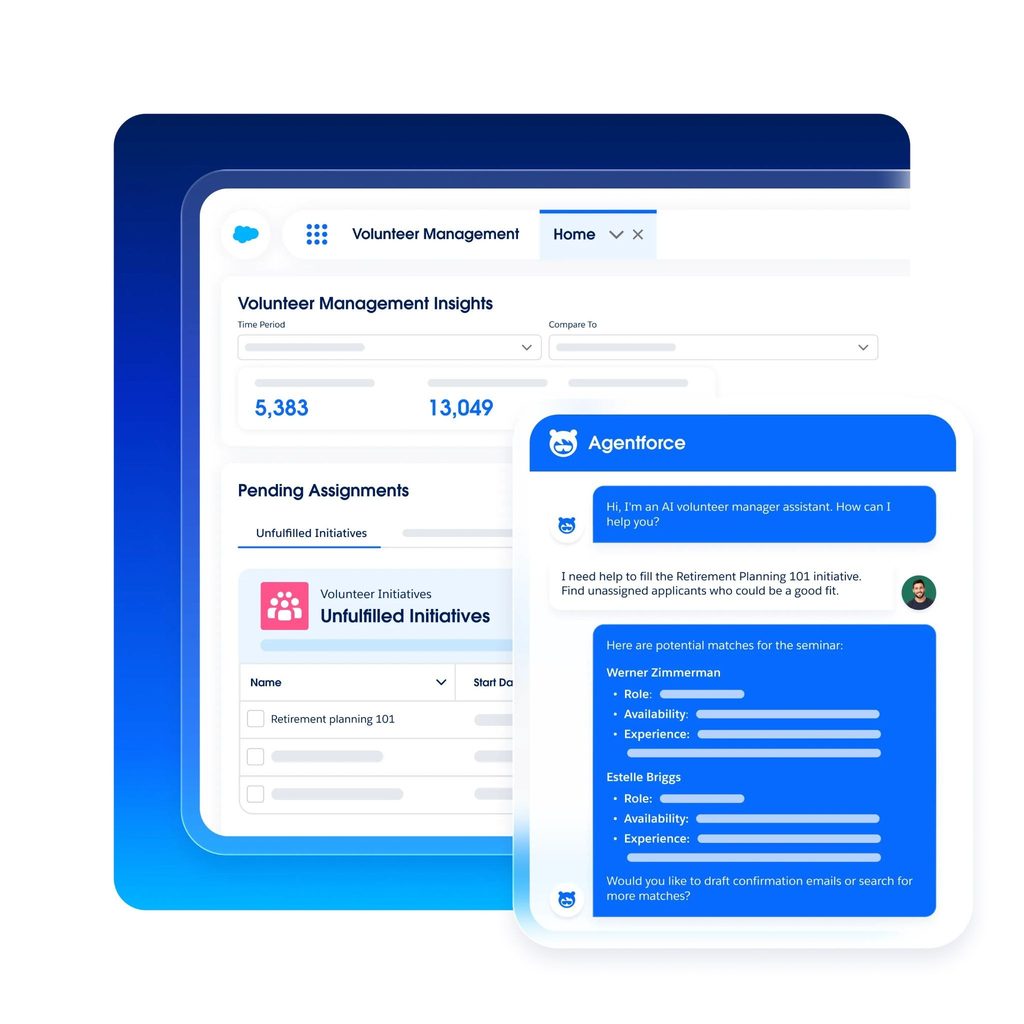
We’ve seen the value of getting volunteer work out of spreadsheets firsthand. For the Keep Arkansas Beautiful Commission, we replaced spreadsheet tracking with a central Salesforce Service Cloud hub. Event submissions now come in through a Jotform integration on their website, supplies and inventory are tracked in one place, and approval emails go out automatically. Their small team gained real-time visibility into local events and resources and can spend more time on their mission.
Managing Regulatory Field Operations
On the other side of field operations are regulatory, compliance, and enforcement work.
Take fish and hunting licensing. Agencies have often treated a license as a transaction: a citizen buys a permit, and the record sits in a database. But a license is also a field compliance tool, and rangers need current information to enforce it.
Our Wildlife & Licensing solution connects licensing data to Salesforce Field Service, so officers in remote areas can validate licenses from a mobile device instead of relying on paper logbooks. When they find a violation, they can document it, capture photos, and log it on the spot, keeping an auditable record. Agentforce can summarize incident reports and recommend extra crew or equipment when a situation calls for it.
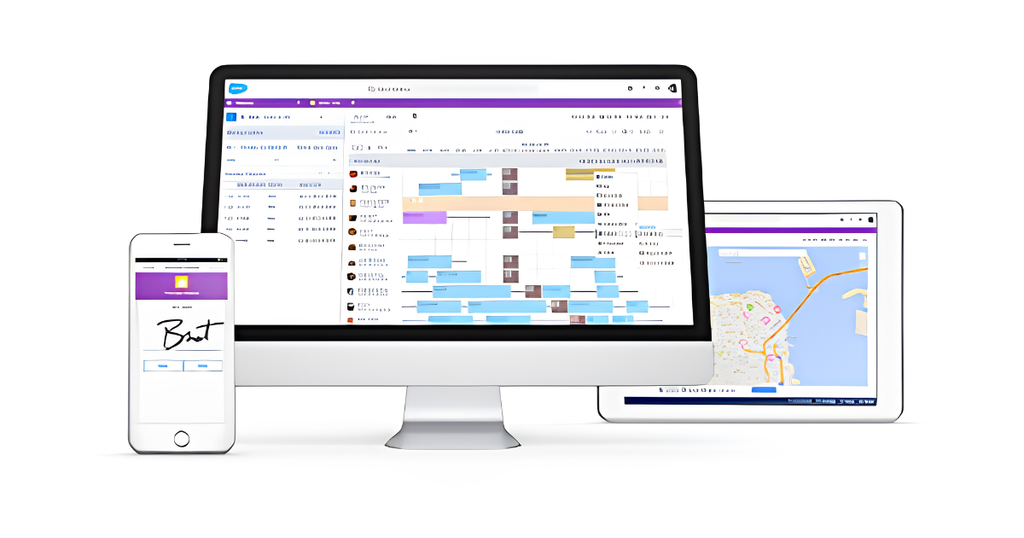
Our work with the Tennessee Wildlife Resources Agency (TWRA) shows what connected field data can do. We built a Service Cloud case management system for bear incidents, integrated with the state’s SmartCop 911 system, along with field asset tracking and a knowledge library. Response times went from days to hours, TWRA opened its knowledge resources to the public, and the agency gained geospatial analytics on incidents and relocations.
The Real Value: Departmental Scalability
Once the core architecture is built, a new departmental need doesn’t require new software. You extend the platform you already own.
The same system that schedules volunteers and supports wildlife enforcement can manage park inspections with action plans and digital safety checklists, route code enforcement officers, dispatch animal control teams, or send environmental inspectors to check water quality. Agencies get one view of their field operations and less administrative work in every department.
Building It Clean with Vectr Solutions
Modernizing field operations across departments takes deep technical expertise. Connecting Salesforce to legacy databases through non-compliant middleware risks data spillage and compliance failures. Tools like MuleSoft offer US Government-compliant environments, but many common commercial tools don’t support the isolation boundaries sensitive public sector data requires.
Vectr Solutions builds secure, compliant systems from day one. Our team of enterprise and integration architects favors native configuration over custom code, using tools like OmniStudio and the Business Rules Engine so your team can maintain the platform after launch. Our field operations solutions are built on standard Field Service, Agentforce, and Tableau, and can be delivered in about 9 weeks.
We also use the Prosci™ Change Management Methodology to help field staff, game wardens, and volunteers adopt the new tools, and we support agencies long-term with right-sized Managed Services.
Stop building isolated programs that keep your team in spreadsheets. Build a connected field operations engine.