

Key Takeaways
- Most stalled Agentforce projects aren’t stuck because of the technology. They’re stuck because the people who have to work alongside the agent weren’t prepared for it.
- One industry analysis found fewer than 1 in 10 Agentforce customers in financial services had moved past a pilot into actual production use, a gap that points to adoption, not capability.
- Traditional Salesforce change management still applies to agentic AI, but rolling out something that acts on its own adds steps that a typical feature launch doesn’t need.
- Vectr Solutions builds change management directly into Agentforce rollouts, drawing on the same phased approach we presented at Dreamforce this year.
A lot of the conversation since Dreamforce has centered on what Agentforce, Claudeforce, and the rest of this year’s announcements can do. That’s the easy part to get excited about. The harder question, and the one that actually determines whether any of it sticks, is whether the people using these tools every day are ready for them.
One analysis of the financial services sector found that fewer than 1 in 10 companies running Agentforce had moved past a pilot into real production use. That’s not a technology problem. It’s an AI change management problem, and it’s the same one Salesforce customers have dealt with for years, just with higher stakes this time.
Why AI Change Management Feels Different With Agentforce
Salesforce has rolled out plenty of new features over the years, and most of them followed a familiar pattern: train a few power users, update some documentation, let adoption build gradually. Agentforce doesn’t fit that pattern as neatly, because an agent doesn’t just sit there waiting to be used. It can draft a response, update a record, or route a case on its own, based on rules someone configured ahead of time.
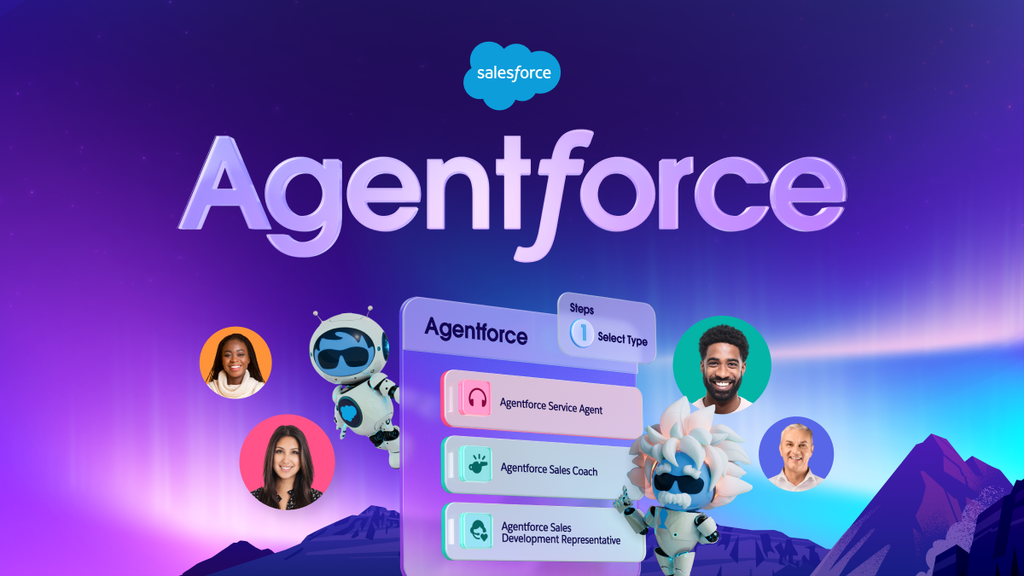
Source: https://www.salesforce.com/news/press-releases/2024/09/12/agentforce-announcement/
That changes the nature of the rollout. Staff aren’t just learning where to click. They’re learning to trust something that takes action without asking first, and that kind of trust doesn’t build the same way a new dashboard does.
The ADKAR Model: A Change Management Framework That Still Holds Up
At Vectr Solutions, we lean on the ADKAR model for change management, a framework from Prosci that’s been around for years and still applies here, maybe more than ever. It breaks a rollout into five plain steps: Awareness, Desire, Knowledge, Ability, and Reinforcement.
-
Awarenessmeans people understand what’s changing and why before it shows up in their workday.
-
Desiremeans they actually want to work with the change, not just tolerate it.
-
Knowledgemeans they understand how the new process works.
-
Abilitymeans they’ve had a real chance to practice it.
-
Reinforcementmeans the change sticks after the initial excitement fades.
None of that is new. What’s new is how much weight each step carries when the “change” is a system that can take action on a person’s behalf.
Applying ADKAR to AI Agents, Not Just Features
Awareness for an agentic rollout has to go further than a release note. Staff need to know specifically what the agent is allowed to do, what it isn’t, and what happens when it gets something wrong, before the first case gets routed automatically.
Desire is where trust becomes the real subject. A service rep who feels replaced by an agent will resist it quietly for months, while one who understands the agent is handling the repetitive parts so they can focus on harder cases tends to come around.
Knowledge means walking through actual examples of what the agent does with real data, not a generic demo.
Ability means giving people a low-stakes way to work alongside the agent before it’s handling anything that matters, so mistakes happen in practice instead of in front of a constituent or a customer.
Reinforcement is where governance comes in. Someone needs to be watching what the agent is doing, catching drift early, and adjusting the rules as real use turns up cases nobody planned for.
This is also where a tool like Agent Fabric fits, since it gives a team the visibility to catch problems before they become a pattern, something we wrote about earlier this year.
Agentforce Change Management in Practice
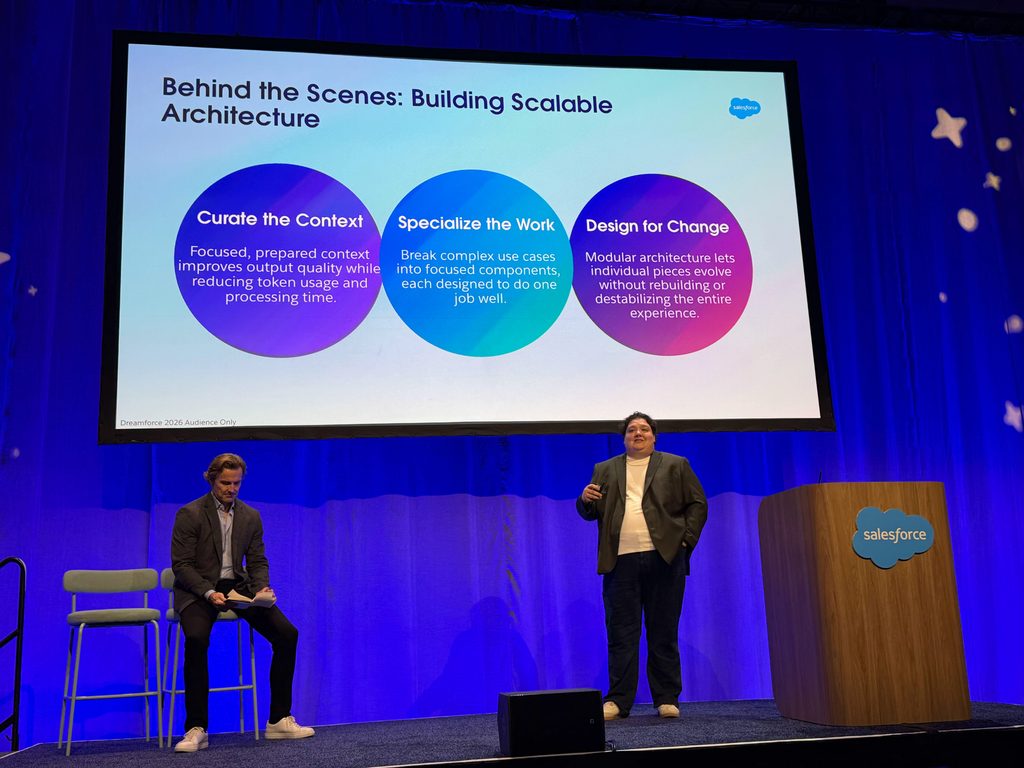
This isn’t theoretical for us. Our Dreamforce session this year walked through exactly this process with a nonprofit client, covering how they built an Agentforce roadmap using Slack and Data 360 with governance phased in deliberately rather than turned on all at once. That phasing is the difference between a pilot that quietly disappears after six months and one that becomes how a team actually works.
We’ve seen the same pattern with resource-constrained teams like the ones behind our Keeping Arkansas Beautiful engagement, where a small staff didn’t have the bandwidth to figure out a new process through trial and error, so the change had to be planned around their actual capacity from day one.
Skipping that planning has a real price, which we broke down in our look at the cost of not having change management.
Why Implementation and Change Management Can’t Be Separated
Salesforce implementation work and change management work have always gone together for us, but agentic AI is the clearest case yet for why they can’t be separated. A technically sound Agentforce build that nobody trusts or understands will sit unused, and a well-planned rollout with a weak build won’t hold up either. Getting both right at the same time is the actual work, and it’s the part that doesn’t show up in a keynote demo.
Agentforce Change Management FAQ
What is the ADKAR model?
ADKAR is a change management model from Prosci that breaks change into five stages: Awareness, Desire, Knowledge, Ability, and Reinforcement. Each stage has to be in place for a change to stick with the people living through it.
Why do Agentforce pilots stall?
Most stall because the people working alongside the agent weren’t prepared for it, not because the technology failed. Staff who don’t understand what the agent can do, or who feel replaced by it, quietly work around it.
How is AI change management different from a typical Salesforce rollout?
An AI agent takes action on its own, so staff have to trust it, not just learn where to click. That puts more weight on explaining the agent’s limits, practicing in low-stakes settings, and governing it after launch.
Before Your Next Agentforce Rollout
If your team is planning an Agentforce project, or trying to figure out why an earlier pilot never turned into real use, that’s worth a conversation before the next phase starts. Reach out to Vectr Solutions, and we’ll walk through what a change management plan for this looks like for your organization specifically.