

If you work anywhere near federal contracting, you have seen FedRAMP and CMMC show up in the same sentence more times than you can count. They appear in the same solicitations, get raised in the same compliance meetings, and it is easy to assume that satisfying one automatically satisfies the other.
It does not. That assumption is the source of most of the confusion in this space, and it is worth clearing up before it costs you a contract award.
Here is the cleanest way to hold the difference in your head: FedRAMP asks whether the cloud platform is secure enough to host federal data. CMMC asks whether your organization is handling that data responsibly, day to day, inside it.
For teams on Salesforce Government Cloud, that distinction is operational, not academic. An authorized platform gives you a secure foundation. It does not make you compliant on its own. What you build on top of that foundation, who can see which records, how data moves, how access gets controlled and logged, is a separate question with its own answer, and it is yours to give.
Key Takeaways
- FedRAMP evaluates the platform. CMMC evaluates the contractor. Neither one satisfies the other.
- Salesforce Government Cloud carries a FedRAMP Moderate authorization. Government Cloud Plus carries FedRAMP High. Government Cloud Plus Defense is the tier built for DoD Impact Levels 4 and 5.
- The two frameworks are connected by DFARS 252.204-7012, which requires cloud services holding covered defense information to meet FedRAMP Moderate or equivalent. That clause is why a compliant platform is a prerequisite, not a finish line.
- CMMC Phase 2 was suspended on July 13, 2026, but Phase 1 self-assessment, SPRS scoring, and annual affirmations remain fully in force.
- Under the shared responsibility model, Salesforce secures the cloud. You secure what you configure inside it: permission sets, sharing rules, session settings, encryption, and audit logging.
First, the Acronym Decoder
Government security compliance runs on initialisms, and half the confusion in a compliance meeting comes from two people using the same acronym to mean different things. Worth getting straight before anything else:
- FedRAMP (Federal Risk and Authorization Management Program): the government-wide program that authorizes cloud service providers to host federal data.
- CMMC (Cybersecurity Maturity Model Certification): the DoD program that verifies defense contractors are actually implementing required cybersecurity practices.
- FCI (Federal Contract Information): information provided by or generated for the government under contract, not intended for public release.
- CUI (Controlled Unclassified Information): sensitive unclassified information that requires safeguarding under law, regulation, or government-wide policy. CUI is the trigger for most of what follows.
- NIST SP 800-53: the security control catalog FedRAMP is built on.
- NIST SP 800-171: the 110 security requirements for protecting CUI in non-federal systems. This is the CMMC Level 2 standard.
- NIST SP 800-172: the enhanced requirements layered on top of 800-171 for CMMC Level 3.
- C3PAO (CMMC Third-Party Assessment Organization): an accredited assessor authorized to certify a contractor’s CMMC Level 2 status.
- SPRS (Supplier Performance Risk System): the DoD system where your self-assessment score and affirmation get reported. Contracting officers check it.
- DFARS 252.204-7012: the contract clause that has required NIST SP 800-171 implementation and incident reporting since 2017, independent of CMMC’s timeline.
What FedRAMP Actually Governs
FedRAMP exists so that federal agencies do not each have to run their own security review of every cloud product they want to buy. One standardized process, built around the security controls in NIST SP 800-53, evaluates the cloud service provider. Agencies across government can then rely on that single authorization instead of duplicating the work.
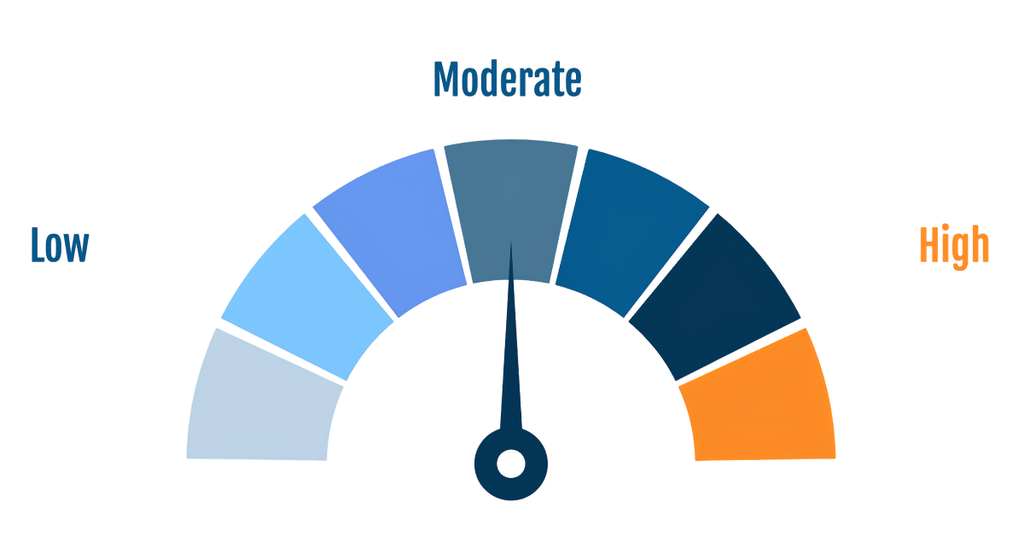
Authorizations come in three tiers: Low, Moderate, and High.
For Salesforce Government Cloud, the tiers map out like this:
| Environment | Authorization level | Typical use |
| Government Cloud | FedRAMP Moderate agency ATO | Public sector work below the CUI threshold |
| Government Cloud Plus | FedRAMP High, DoD Impact Level 2, runs on AWS GovCloud (US) | Most contractors handling CUI |
| Government Cloud Plus Defense | DoD Impact Level 4 and Impact Level 5 | Higher-sensitivity CUI, mission data, and unclassified national security systems |
That distinction between Government Cloud Plus and Government Cloud Plus Defense gets flattened constantly in vendor marketing, and it matters. If a solicitation calls for IL4 or IL5, base Government Cloud Plus is not the answer. If you are still working out which tier your contracts actually require, our breakdown of Government Cloud versus Commercial Cloud walks through the decision.
Here is where teams get tripped up. FedRAMP authorization stops at the platform’s edge. It confirms Salesforce built and maintains a secure system. It says nothing about how your organization configures that system, who gets access to which records, or how your team uses it on a Tuesday afternoon. That last part is what most Salesforce FedRAMP compliance conversations skip past, and it is exactly where CMMC picks up.
What CMMC Governs
If FedRAMP evaluates the platform, CMMC evaluates you.
Run by the Department of Defense, CMMC checks whether companies in the defense industrial base have real security practices in place, not just a policy binder, before they are allowed to handle FCI or CUI.
CMMC 2.0 is no longer a proposal sitting in rulemaking. The program rule took effect in December 2024, and the companion acquisition rule that lets contracting officers write CMMC requirements into contracts took effect on November 10, 2025. Since then, CMMC has been a real condition of award.
For most contractors handling CUI, the benchmark is CMMC Level 2, which aligns with the 110 security requirements in NIST SP 800-171. Level 3 adds the enhanced requirements from NIST SP 800-172 for the most sensitive programs. Depending on the contract, meeting the Level 2 benchmark means either a self-assessment your company submits and signs, or a formal assessment from an accredited C3PAO. Knowing which path applies is a pre-bid question, not a post-award one.
Where the Rollout Actually Stands Right Now
On July 13, 2026, the Department of Defense suspended CMMC Phase 2, the stage that would have made third-party C3PAO certification a condition of award across a much wider set of contracts beginning November 10, 2026. Phases 3 and 4 and all future implementation milestones were suspended along with it, pending a 60-day review by a newly established CMMC Reform Task Force. That task force is expected to deliver recommendations around mid-September 2026.
What the pause did not do is lift a single security obligation:
- Phase 1 self-assessment requirements remain in force.
- SPRS score submission and annual executive affirmation are still mandatory.
- DFARS 252.204-7012 and NIST SP 800-171 are untouched. Those obligations have applied since 2017.
A suspension is not a repeal. And with the outside assessor temporarily out of the picture, the score you grade yourself, sign, and upload is the only security signal a contracting officer sees.
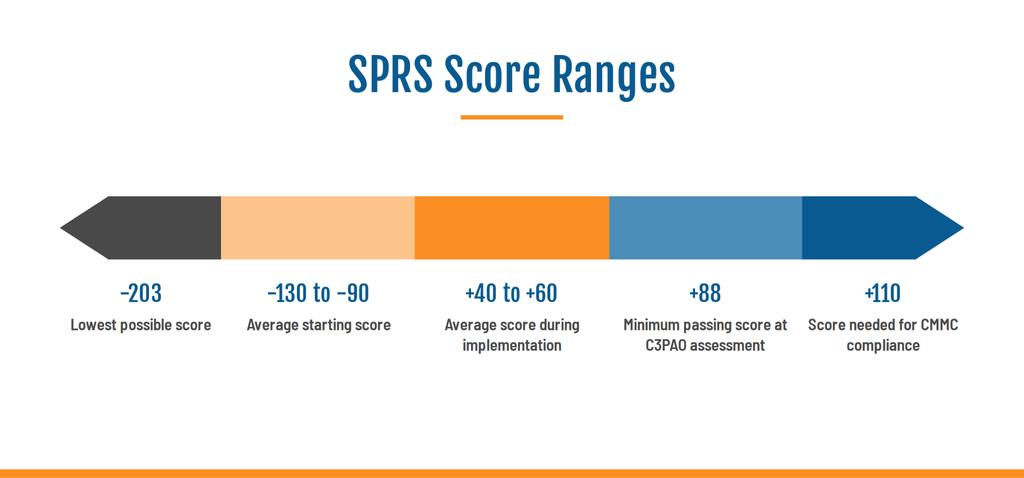
We wrote about why that shift concentrates risk rather than relieving it in CMMC Phase 2 Suspension: The Risk Didn’t Disappear, It Moved to Your Own Score.
If you are building a compliance roadmap right now, build it around what is in force today. The third-party requirement is the part still in motion.
FedRAMP vs. CMMC at a Glance
Side by side, the differences come down to four questions.
| FedRAMP | CMMC | |
| What does it evaluate? | The cloud platform and its infrastructure | The contractor’s security practices and daily operations |
| Who does it apply to? | Cloud service providers, such as Salesforce | Defense contractors handling FCI or CUI |
| What standard is it measured against? | NIST SP 800-53 | NIST SP 800-171 for Level 2, NIST SP 800-172 for Level 3 |
| How is it verified? | Assessment by a FedRAMP-recognized 3PAO, authorized through a sponsoring agency | Self-assessment or C3PAO assessment, reported to SPRS |
Put simply: FedRAMP confirms the software vendor built and maintains a secure platform. CMMC confirms the contractor manages that platform, and its own operations, responsibly.
These are not rival frameworks competing for the same job. They are two different answers to two different questions, and most GovCons on Salesforce Government Cloud need both.
The Clause That Connects Them
There is one detail that explains why these two frameworks keep appearing together, and it is the piece most explainers leave out.
DFARS 252.204-7012 requires that any cloud service holding covered defense information meet FedRAMP Moderate baseline security requirements or equivalent. That single clause is the hinge. Your CMMC obligation is what pushes you toward a FedRAMP-authorized environment in the first place. A standard commercial Salesforce org generally cannot satisfy it.
So the relationship is not “either/or” and it is not “one covers the other.” It is sequential. The platform authorization is the prerequisite. Your own implementation is what actually gets assessed.
Salesforce supports this directly: the company maintains a third-party NIST SP 800-171 attestation letter for Government Cloud Plus, available through the FedRAMP Package Access process or your Salesforce account team. That letter is useful evidence for your assessment package. It is also not a substitute for your own control implementation, which is the whole point.
Do You Need FedRAMP, CMMC, or Both?
The shortcut version:
If you are evaluating a cloud platform, FedRAMP is the relevant question. Choosing Salesforce Government Cloud, or Government Cloud Plus for CUI work, satisfies the platform-level requirement immediately.
If you are a contractor handling CUI or FCI, CMMC is the relevant question, and it is yours to answer, not your software vendor’s. A contracting officer is not going to check Salesforce’s FedRAMP status and call your organization done.
Most GovCons need to think about both, because of the cloud shared responsibility model. The line runs like this:
Salesforce is responsible for security of the cloud:
- Data centers and physical safeguards
- Network and infrastructure controls
- Core platform code, patching, and continuous monitoring
You are responsible for security in the cloud:
- Permission sets, profiles, and sharing rules
- Session settings and multi-factor authentication
- Encryption choices and field-level security
- Audit logging and event monitoring
- Every integration boundary you connect
Turning on Salesforce Shield or enabling Event Monitoring is your team’s job, not your platform provider’s. That boundary is where assessments succeed or stall, and it is the same boundary a self-attested SPRS score rests on. For a deeper look at how that plays out inside a real org, see our guide to securing sensitive data in Salesforce Government Cloud.
How Vectr Solutions Helps You Navigate Both
The gap usually shows up in the same place. Teams know they need a compliant platform. They know they need compliant operations. Nobody has connected the two, and there is no document that says where one ends and the other begins.
We work in that seam. As Salesforce architects who spend our days inside regulated federal environments, we help government contractors configure Government Cloud to actually support CMMC Level 2 readiness: role hierarchies built around least-privilege access, tightened session controls, MFA and SSO enforced rather than merely available, and Event Monitoring turned on so there is a real audit trail instead of a hope and a guess.
We also help teams draft Control Implementation Summaries, the document that spells out which controls are inherited from Salesforce’s FedRAMP authorization and which ones your team owns and maintains. Assessments tend to stall exactly where that line gets blurry. Having it in writing, backed by an architecture that matches it, is what keeps a review moving.
This is not theoretical for us. When an aerospace and defense manufacturer building unmanned aerial systems needed to run business development across commercial and government segments, we built a FedRAMP-aligned Salesforce Government Cloud instance staffed exclusively by U.S. citizen resources, layered in MFA, SSO, and Shield event monitoring, and delivered a centralized, audit-ready pipeline.
And because sustained compliance depends on people using the system correctly, not just on it being configured correctly, we pair architecture work with structured change management so secure habits hold after the project ends.
Not Sure Which Framework Applies to You?
FedRAMP and CMMC ask different questions, and most GovCons running Salesforce end up needing to answer both. Our Salesforce Advisory and Governance team can help you sort out where your org stands, where the inheritance line falls, and what to prioritize next.