
Key Takeaways
- MuleSoft Agent Fabric, Salesforce’s governance layer for AI agents across vendors, reached general availability earlier this year, with named components that give regulated organizations something concrete to point to during an audit.
- The piece most worth understanding is Trusted Agent Identity, which authenticates and logs every agent action, giving compliance teams a record that maps to controls they already have to satisfy.
- Agent Fabric now governs agents built on other vendors’ models too, not just Salesforce’s own, which matters for organizations already running AI tools outside Salesforce.
- General availability doesn’t automatically mean a specific feature is inside your organization’s FedRAMP or CMMC boundary. That still has to be confirmed separately.
We wrote about MuleSoft Agent Fabric back in June, when it was still an emerging pattern more than a finished product. Since then, it’s moved from concept to something you can actually turn on, with named parts and real customers running it.
This piece picks up where that one left off and is about what’s changed for AI agent governance now that it’s live, and what it means specifically for organizations operating under FedRAMP, CMMC, or ITAR.
Agent Fabric: From Concept to General Availability
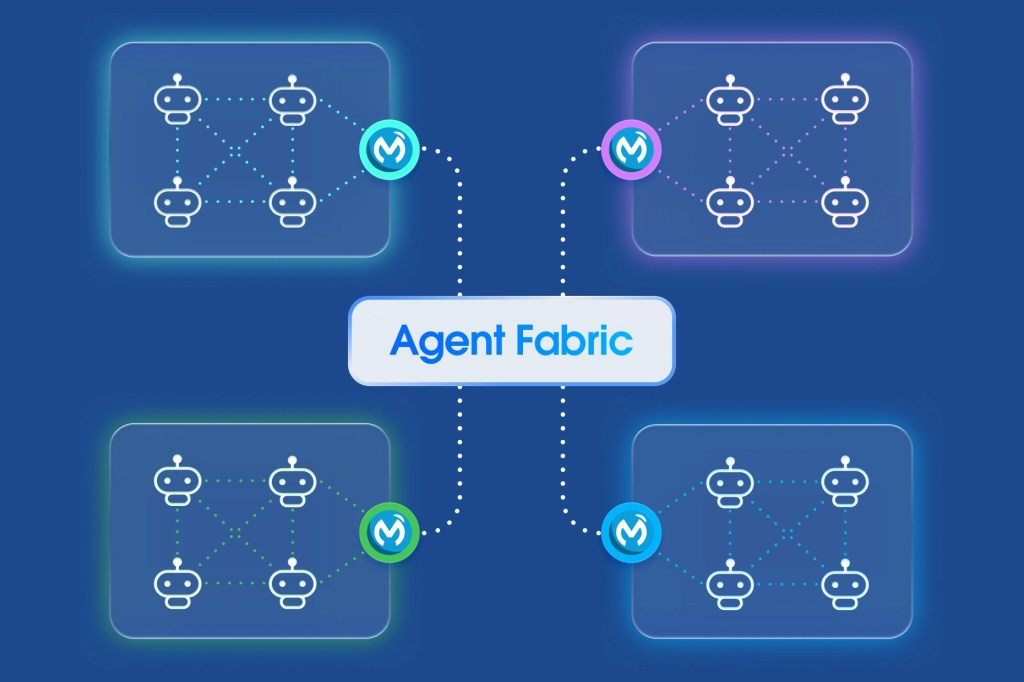
Agent Fabric launched in September 2025 and expanded through the first half of this year, reaching general availability earlier in 2026. Since its original launch, Salesforce says it has managed and coordinated thousands of agent instances for customers ranging from large enterprises like Capita to more specialized providers like Alcon and Diabsolut.
Source: https://www.mulesoft.com/ai/agent-fabric
That’s a meaningful shift from where things stood in June. A governance framework that exists mostly in documentation is one thing. A governance framework that’s been running in production across real customer environments for months is a different, more testable claim, and it’s worth taking seriously for that reason.
The Five Components of MuleSoft Agent Fabric
Salesforce breaks Agent Fabric into five components, and it’s worth understanding each one in plain terms rather than getting lost in the names.
AI Gateway
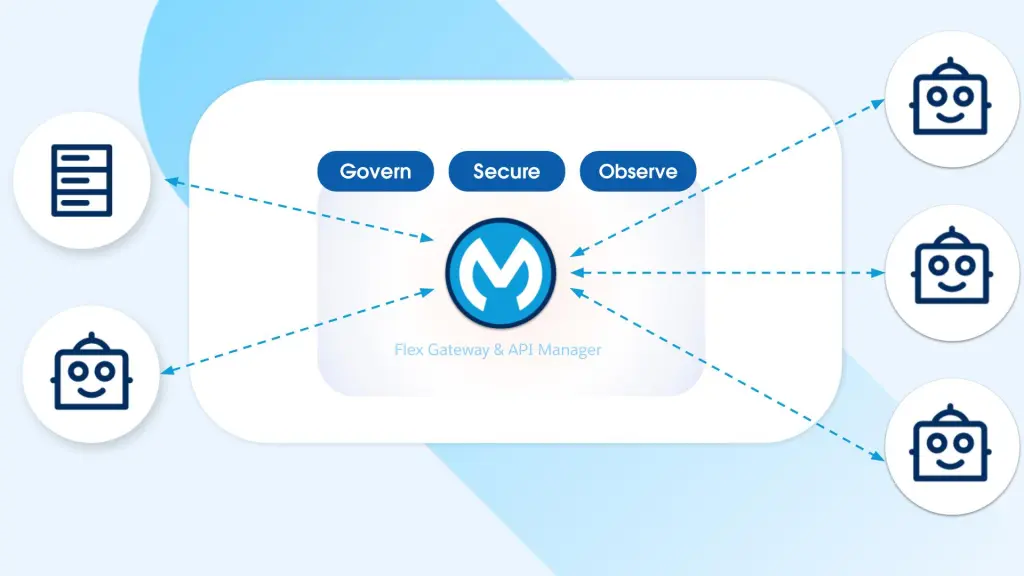
The single checkpoint every AI model call passes through. Instead of each agent talking directly to whatever model it happens to be wired to, every call goes through one place that can apply rules around cost, content, and security.
MCP Bridge
Does something similar for tool connections, governing what an agent is allowed to reach and act on outside its own walls.
Trusted Agent Identity
Authenticates every action an agent takes, which we’ll come back to.
Agent Broker
Coordinates across vendors, so an agent built on Salesforce’s own models and one built on a different provider can still be managed from the same place.
Agent Broker followed a later release timeline than the other components, so confirm its current status for your org.
Agent Script
Lets an organization write deterministic rules for specific steps, meaning some actions follow a fixed, predictable process instead of being left entirely to the agent’s judgment.
Together, Salesforce calls this approach Guided Determinism, which is really just a way of saying that not every step in a process needs full autonomy, and the organization gets to decide which ones do.
Why Trusted Agent Identity Is the One to Watch
Of the five, Trusted Agent Identity is the piece that matters most for a regulated organization, because it’s the part that produces an audit trail. Every time an agent takes an action, whether that’s updating a record, pulling a document, or handing a task to a different agent, Trusted Agent Identity confirms which agent did it, under which model, with what permissions, and logs that event.
Source: https://www.mulesoft.com/platform/ai/ai-agent-governance
For a public sector agency or a government contractor, that’s not a technical detail. That’s the same kind of record a security review or a CMMC assessment already expects to see for human users, now extended to cover non-human actors doing work inside the same systems. Auditors are going to ask who did what and when, regardless of whether the “who” is a person or an agent, and this is the component that answers that question.
One Control Plane for Multi-Vendor AI Agent Governance
The other change worth understanding is that Agent Fabric isn’t limited to agents built on Salesforce’s own models anymore. It now governs agents running on Amazon Bedrock, Microsoft’s Azure AI Foundry, OpenAI, and Google Gemini, connecting to each through standard APIs and MCP bridges.
Most organizations we work with aren’t running a single AI vendor. They’ve got a Salesforce Agentforce deployment, maybe a Microsoft Copilot rollout in another department, and possibly a homegrown tool someone in IT built a while back.
Agent Fabric gives a team one place to see all of that activity instead of piecing together separate logs from separate vendors, which matters when a security review asks for a complete picture rather than a partial one. We’ve also written about how agent-to-agent architecture works across multiple agencies.
What General Availability Does and Doesn’t Mean for FedRAMP and CMMC
None of this means Agent Fabric is automatically part of your organization’s authorized boundary. General availability is a statement about the product being ready for broad use. It isn’t the same as confirmation that a specific feature has cleared your agency’s FedRAMP authorization or fits inside an existing Authorization to Operate.
We saw this same gap when Salesforce Marketing Cloud Next received FedRAMP High authorization: the authorization was real, but it only applied to the specific configuration Salesforce had put through review, and any organization still had to confirm how their own environment mapped to it. The same logic applies here. Confirm Agent Fabric’s specific components against your Government Cloud authorized products list before building a regulated workflow around it, rather than assuming general availability settles the question.
Where Agent Fabric Fits Into Our Work
Governance and integration architecture are the parts of a Salesforce project that don’t show up in a keynote demo, but they’re where most of our work with public sector agencies and government contractors actually happens.
On a recent engagement, we helped a state agency keep its data clean and its timeline intact through a rapid Salesforce expansion, and that kind of work depends on the same discipline Agent Fabric is trying to formalize: knowing exactly what’s touching your data, under what rules, and being able to prove it later.
As more of our clients start layering agents from multiple vendors on top of their Salesforce environments, Agent Fabric is likely to become a regular part of that conversation, and we’d rather walk into it with a clear picture of what it does than treat it as another feature to bolt on.
MuleSoft Agent Fabric FAQ
What is MuleSoft Agent Fabric?
Agent Fabric is Salesforce’s control plane for discovering, governing, and coordinating AI agents, built on MuleSoft. It covers agents built on Salesforce’s own models as well as agents running on other vendors’ platforms, such as Amazon Bedrock and Microsoft’s Azure AI Foundry.
What does Trusted Agent Identity do?
It authenticates every action an AI agent takes and logs which agent acted, under which model, and with what permissions. That gives auditors the same who-did-what record they already expect for human users.
Is Agent Fabric FedRAMP authorized?
General availability isn’t the same as FedRAMP authorization. Check Agent Fabric’s specific components against Salesforce’s Government Cloud authorized products list and your own Authorization to Operate before building a regulated workflow on it.
If You’re Weighing Agent Fabric for Your Environment
If your team is trying to figure out whether Agent Fabric belongs in your Agentforce roadmap, or what it would take to bring your existing multi-vendor AI use under one governance layer, that’s worth a conversation before the next phase of your rollout.
Reach out to Vectr Solutions, and we’ll help you map out what applies to your organization specifically.