
Every day, public sector teams make critical decisions that impact community welfare, yet the vital data they need is often trapped inside legacy architectures and disconnected departmental databases.

For state, local, and education (SLED) agencies, transforming these raw files into coordinated community services remains a persistent challenge. Bridging this operational gap requires a modern approach. By utilizing a robust Tableau Salesforce integration, agencies can break down traditional communication barriers, advance their data analytics capabilities, and gain the visibility needed to make fast, reliable decisions. The hard part isn’t connecting a dashboard to a database, it’s doing it inside a compliance boundary that will survive a security audit. That’s the problem Vectr Solutions builds around.
The Challenge of Data Silos in SLED Organizations
Historically, departments have operated in silos, leaving administrative staff to rely on manual reporting pipelines to compile performance metrics. When information is manually pulled from separate systems, managers are forced to rely on historical records that may be weeks or even months old.
This delay hinders an agency’s ability to plan budgets accurately or respond dynamically to changing regional demands. Moving beyond legacy Salesforce reporting solutions to a unified analytics strategy is key to staying ahead of operational bottlenecks.
Connecting Tableau and Salesforce for the Public Sector
This is where combining Salesforce as a secure system of record with Tableau as an intuitive visualization engine transforms daily operations.
Integrating Tableau workflows enables agencies to centralize their data, converting complex regulatory, case, and financial datasets into clear, interactive displays. Powered by secure systems like Salesforce Data 360, this framework harmonizes disparate databases, giving multiple departments a single, consistent model for administrative tracking.
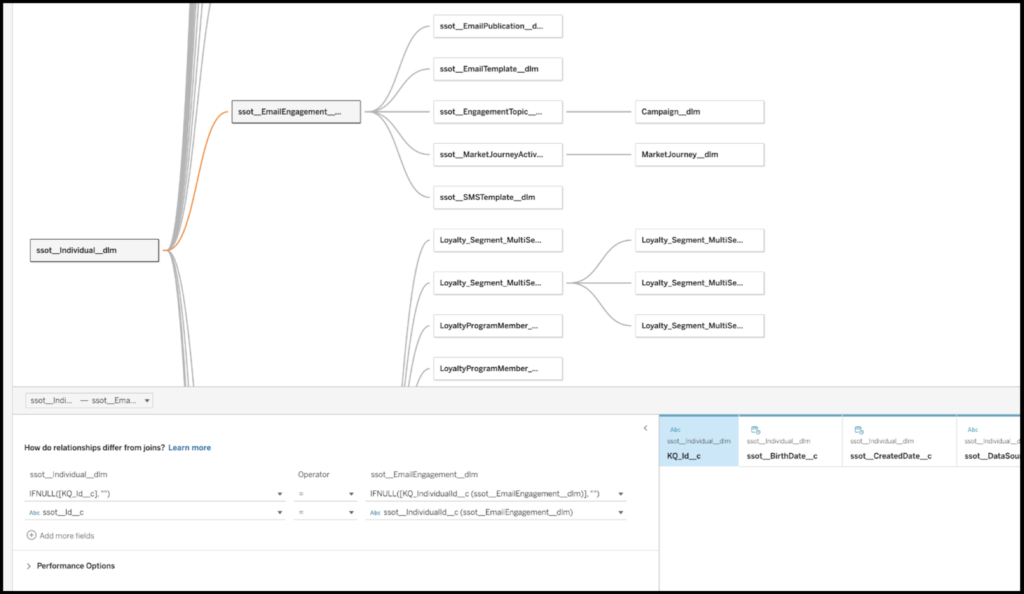
Source: https://help.salesforce.com/s/articleView?id=data.c360_a_using_customer_360_aud_data_in_tableau.htm&type=5
Turning Data into Actionable Operational Insights
When data is visual, it becomes a practical tool that directly improves the constituent experience. Through customized Tableau dashboards embedded directly on agency homepages, caseworkers and program directors can view active queues and operational trends without switching between applications.
For mobile leadership, modern alert tools can push critical metric updates straight to active communication channels. This approach delivers the real-time data insights public sector teams need to streamline daily operations and resolve open cases faster.
Practical Applications Across State and Local Agencies
The practical applications of this unified approach span across every level of public service. In public safety, agencies can leverage government data visualization to track incident patterns and optimize the deployment of emergency services. Social services teams can better manage caseworker capacity, leading to faster support delivery.
State agencies have already proven the value of this modernization. For instance, we partnered with an American government services company to successfully transition their child support task management to Salesforce to enhance workflow efficiency and bring closure to local families. On that engagement, the team supported more than 50 caseworkers handling over 70,000 cases annually, cut average case task resolution time from 90 days to 30, and halved the average age of open case tasks.
Similarly, our work with the Keep Arkansas Beautiful Commission replaced manual volunteer coordination and spreadsheet-based tracking with a centralized Salesforce environment, giving their small team real-time visibility into events and resources so they could focus more on community engagement and less on administrative tasks.
Ensuring Security, Governance, and FedRAMP Compliance
Implementing these advanced visual capabilities does not mean compromising on security. These agencies handle highly sensitive citizen records under strict privacy mandates, requiring robust governance structures.
The integrated Salesforce and Tableau architecture supports role-based access permissions, ensuring personnel only view visualizations aligned with their authorized clearances. Furthermore, Salesforce’s public sector analytics stack including: Tableau Next and Data 360 carries FedRAMP High authorization, giving public sector IT leaders full confidence that their analytics environment complies with federal security guidelines and remains prepared for compliance audits.
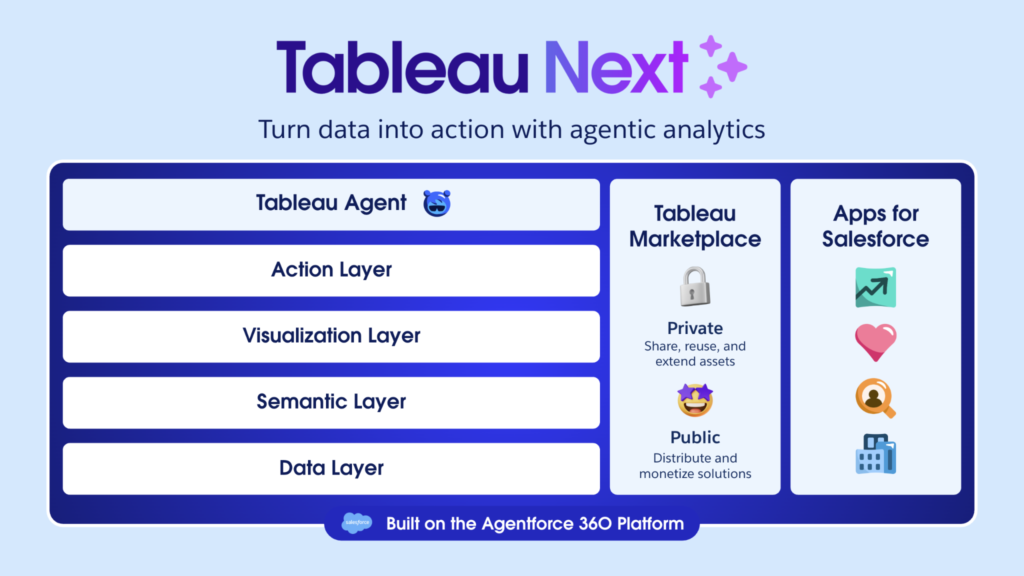
Source: https://www.tableau.com/blog/what-is-tableau-next
Partnering for Long-Term Modernization and Success
Transitioning to a visual, data-driven model is most successful when agencies take a pragmatic, outcomes-focused approach. Working with us helps state and local organizations navigate this digital shift smoothly. Formed by experienced Salesforce and Integration Architects, we guide public sector teams through a proven “Discover, Setup, Extend, and Enhance” delivery framework that prioritizes long-term self-sufficiency and smooth adoption.
By partnering with us to build a scalable strategy, your agency can successfully turn fragmented records into clear visual pathways, enabling faster public services, stronger compliance, and continuous operational clarity. Speak with an expert today to start your integration journey.