

For mission-driven organizations, volunteers are often the force multiplier behind every successful program, event, and community initiative. Yet as volunteer programs grow, many organizations discover that the systems and processes that worked for dozens of volunteers begin to break down when coordinating hundreds or thousands. What starts as a few spreadsheets, inboxes, and online forms quickly becomes a complex web of manual effort that consumes staff time and limits visibility.

At Vectr Solutions, we’ve worked with organizations across the public sector and nonprofit space that face this exact challenge. While AI is currently dominating conversations around operational efficiency, we’ve found that most organizations don’t have an AI problem but a coordination problem. The organizations seeing the greatest value from technologies like Salesforce Agentforce are typically those that first establish a strong operational foundation.
The Reality of Scaling Volunteer Programs
Volunteer management becomes exponentially more difficult as programs expand across regions, events, and community initiatives. Recruiting volunteers is only one piece of the equation. Organizations must also coordinate schedules, track participation, manage communications, oversee supplies and inventory, report on outcomes, and maintain engagement over time.
Unfortunately, these responsibilities are often spread across disconnected systems. Volunteer registrations may live in one platform, event details in another, communications in email inboxes, and reporting in spreadsheets maintained by individual staff members. The result is an operational model that relies heavily on institutional knowledge and manual effort.
When organizations reach this point, leadership often begins looking for automation or AI to alleviate the burden. While those technologies can absolutely help, they are rarely the best place to start.
Most Volunteer Programs Have a Foundation Problem, Not an AI Problem
One of the most common mistakes we see is organizations evaluating AI before establishing a centralized source of truth for volunteer operations.
AI systems are only as effective as the information and processes they are built upon. If volunteer records are incomplete, event data is fragmented, or staff members are following different procedures across programs, introducing AI simply accelerates existing inefficiencies.
In our experience, organizations generate the strongest long-term outcomes when they first focus on:
- Centralizing volunteer and event data
- Standardizing onboarding and communication processes
- Establishing reporting and performance frameworks
- Reducing manual administrative tasks
- Creating a single operational platform for staff
Once these foundational elements are in place, technologies like Agentforce can begin delivering meaningful value.
Building the Foundation: Keep Arkansas Beautiful
A strong example of this approach comes from our work with the Keep Arkansas Beautiful Commission, a statewide organization focused on litter prevention, recycling, environmental education, and community engagement initiatives throughout Arkansas.

The organization was managing volunteer coordination, event participation, inventory tracking, and operational processes through a combination of manual tools and disconnected systems. Staff recognized the need to modernize operations but wanted a solution that aligned with industry best practices while supporting their unique requirements.
Rather than immediately pursuing AI capabilities, the first priority was creating a scalable operational foundation within Salesforce.
Vectr Solutions implemented a centralized volunteer management platform that:
- Consolidated volunteer management into a single system
- Integrated JotForm submissions directly from the organization’s website
- Automated portions of the volunteer event approval process
- Improved inventory and supply management workflows
- Delivered centralized reporting on participation and event outcomes
As a result, staff reclaimed significant time previously spent on manual coordination activities while gaining better visibility into volunteer engagement and program performance.
The lesson is simple: before organizations can effectively leverage AI, they need trusted systems, consistent processes, and reliable data.
Where Agentforce Fits into Volunteer Management
Once that operational foundation exists, Agentforce becomes significantly more impactful.
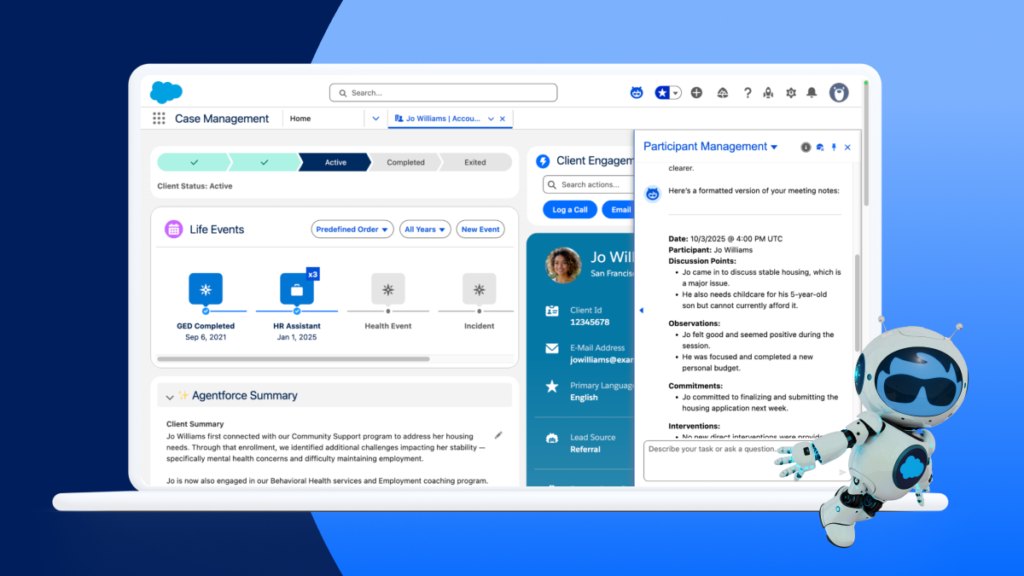
Rather than replacing volunteer coordinators, Agentforce can help extend their capacity by handling repetitive administrative work and providing volunteers with faster access to information.
Source: https://www.salesforce.com/news/stories/agentforce-nonprofit-announcement/
Examples include:
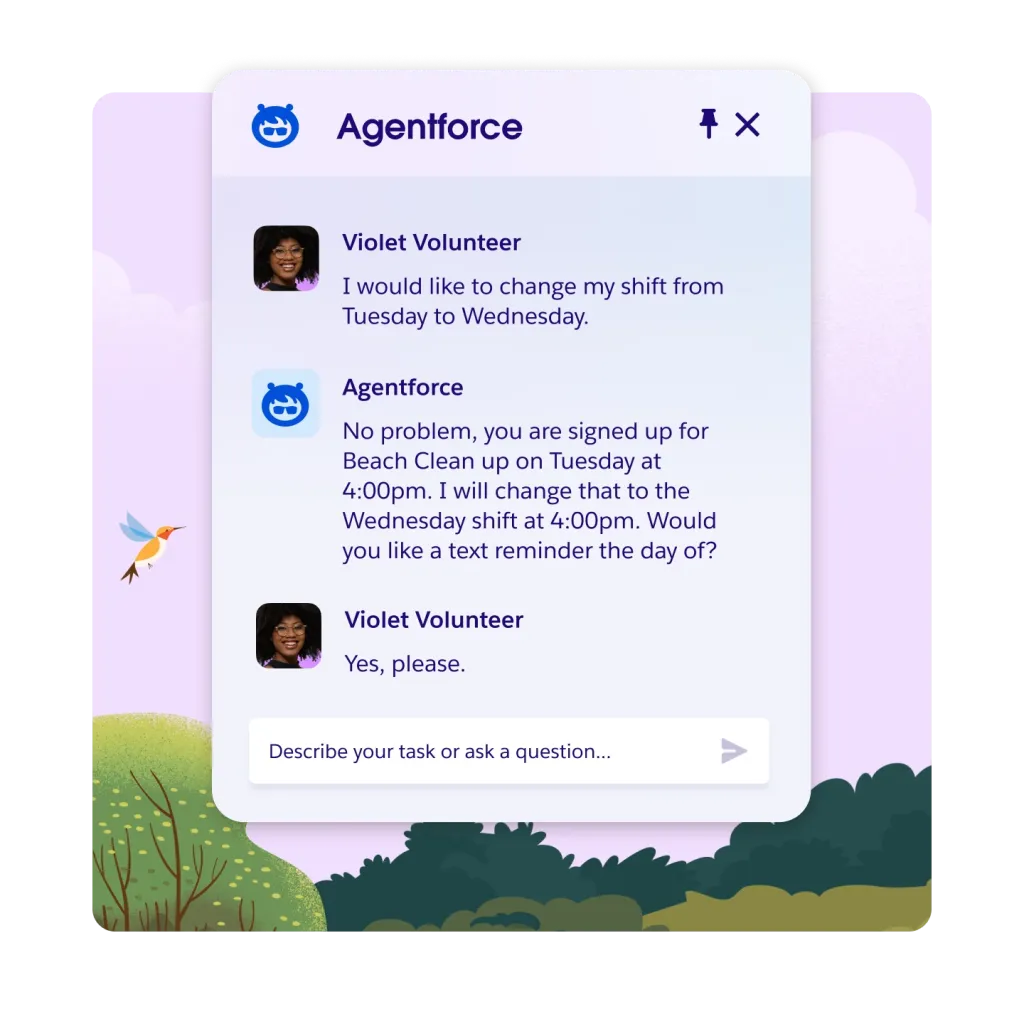
- Answering common volunteer questions about event logistics
- Providing guidance on registration requirements and training materials
- Helping volunteers locate upcoming opportunities based on interests and availability
- Sending proactive reminders before events
- Assisting coordinators with follow-up communications and engagement efforts
- Identifying participation trends and potential volunteer retention risks
The key distinction is that Agentforce performs best when it operates within a well-designed volunteer management ecosystem rather than attempting to compensate for missing processes or fragmented data.
Designing for Long-Term Scale
Organizations often think about volunteer management as an event coordination challenge. In reality, it is a data and relationship management challenge.
As volunteer programs mature, leaders need visibility into questions such as:
- Which programs generate the highest engagement?
- Which volunteers consistently return year after year?
- Which communities are underserved?
- How does volunteer participation influence fundraising or advocacy efforts?
- Where are operational bottlenecks occurring?
Answering these questions requires more than registration forms and spreadsheets. It requires a unified view of volunteer engagement across the organization.
Salesforce Nonprofit Cloud, combined with Data 360 and Agentforce, provides the ability to connect volunteer activities, constituent engagement, communications, and reporting into a single ecosystem. This creates the foundation for both operational efficiency and more strategic decision-making.
Risks and Considerations
While AI presents exciting opportunities, organizations should approach implementation thoughtfully.
One risk is over-automation. Volunteers are motivated by connection, purpose, and community. Organizations should be careful not to create experiences that feel impersonal or transactional.
Data quality also remains a significant consideration. AI systems rely on the information available to them. Outdated documentation, inconsistent records, and unclear business processes can quickly undermine the quality of outcomes.
Finally, organizations should establish clear governance around how AI is used, what decisions remain human-led, and how volunteers interact with automated systems.
In most successful implementations, AI serves as a force multiplier for staff and not a replacement for human relationships.
A Practical Roadmap for Volunteer Organizations
For organizations exploring Agentforce and volunteer management modernization, we typically recommend a phased approach:
Phase 1: Foundation
- Centralize volunteer data
- Standardize processes
- Improve reporting visibility
- Eliminate manual administrative tasks
Phase 2: Automation
- Streamline communications
- Automate approvals and notifications
- Improve volunteer self-service experiences
Phase 3: Agentforce
- Deploy AI-powered volunteer support
- Enhance engagement and retention efforts
- Surface insights and recommendations for coordinators
Source: https://www.salesforce.com/nonprofit/volunteer-management/
This progression helps organizations maximize value while reducing implementation risk.
Moving from Coordination to Orchestration
Volunteer programs are becoming increasingly complex, and the administrative burden placed on staff continues to grow. While AI technologies like Agentforce can play an important role in addressing these challenges, successful outcomes rarely begin with AI itself.
They begin with building the operational foundation necessary to support sustainable growth.
Organizations that invest in centralized data, scalable processes, and strong governance position themselves to take advantage of AI as it continues to evolve. Those that skip those steps often find themselves automating inefficiencies instead of creating meaningful improvements.
At Vectr Solutions, we help organizations build that foundation first so when the time comes to introduce Agentforce, it’s operating on a platform designed for long-term success rather than short-term experimentation.
Ready to modernize your volunteer management operations? Contact Vectr Solutions to explore how Salesforce, Nonprofit Cloud, and Agentforce can support your mission.