
Every autumn, technology leaders across the public sector and defense industrial base look to Dreamforce to figure out where enterprise cloud capabilities are actually heading, as opposed to where a keynote slide says they’re heading. For 2026, the conference theme is “Become an Agentic Enterprise.” Commercial teams will hear that and think sales automation and faster customer engagement. Regulated organizations need to hear something different.
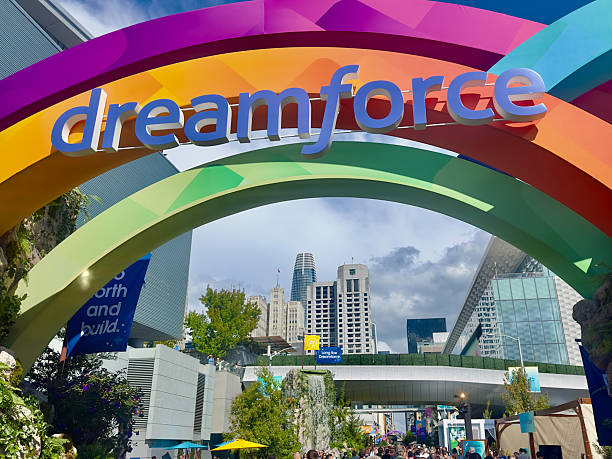
At Vectr Solutions, we sit at that exact intersection every day. Our team builds and supports Salesforce environments for SLED agencies, public sector organizations, government contractors and suppliers, and aerospace and defense manufacturers, so we watch Dreamforce announcements through a compliance and delivery lens first and a hype lens never. This is our read on what to actually pay attention to this year.
For government agencies and federal contractors, an agentic enterprise means a shift away from static record-keeping and toward automated execution: agents parsing regulatory intake, streamlining benefit application processing, and reviewing contract flow-down clauses. We’re already deploying versions of this with our agentic work.
Adopting these tools in a public sector context still requires balancing operational efficiency with strict data governance. Unvetted automation is where compliance risk lives. When autonomous systems touch sensitive workflows, security boundaries and regulatory mandates have to stay intact, full stop. Separating high-visibility conference messaging from practical deployment readiness is the job here, not an afterthought.
Key Dates and Format
Dreamforce 2026 runs September 15 through 17 at the Moscone Center in San Francisco, with keynotes and technical sessions streaming live and on demand through Salesforce+.
That hybrid format matters more for public sector teams than it does for most commercial attendees. Travel restrictions, ethics rules, and constrained training budgets are real constraints, not excuses. Virtual attendance lets agency IT directors, program managers, and compliance officers track product roadmaps in real time without the administrative overhead of a travel authorization. Following these sessions closely gives procurement and program offices early visibility into features before they hit official documentation, which is exactly what you need to align a multi-year modernization plan with a realistic release cycle.
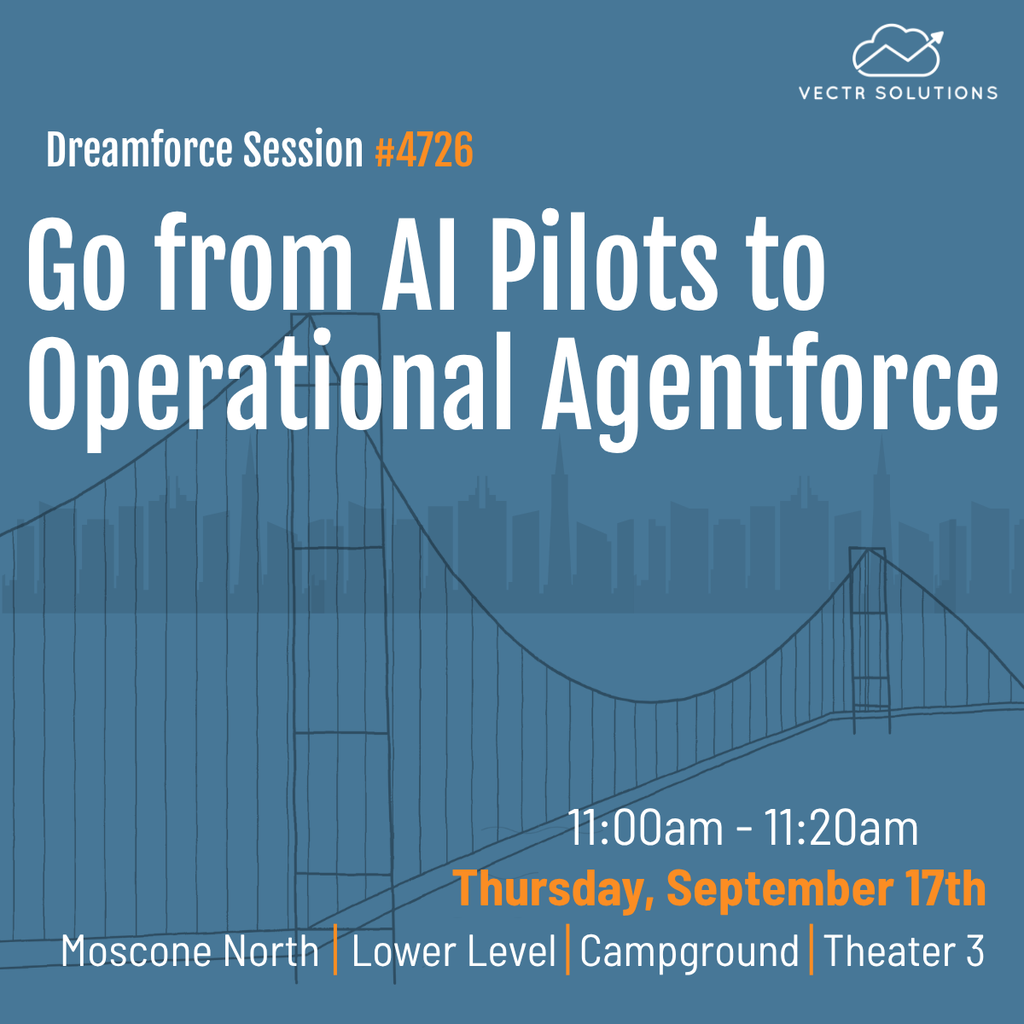
If you’re building your own agenda, we’ll be part of the session lineup this year. Our session, “Go from AI Pilots to Operational Agentforce,” walks through how one organization built an Agentforce roadmap using Slack and Data 360, with phased governance to move from disconnected AI pilots to operational workflows, the same problem most public sector and government contractor teams are wrestling with right now.
What to Watch: Agentforce and Government Cloud
The intersection of autonomous agents and secure cloud architecture is the single most important thing to track this year. Commercial teams can turn on new AI tools quickly. Regulated teams have to evaluate how Agentforce operates inside FedRAMP-validated boundaries first, and that evaluation is where most of the real work happens.
In Government Cloud environments, Salesforce’s Einstein Trust Layer provides protections for generative AI interactions, including secure data retrieval, access controls, data masking where supported, and zero-data-retention protections for third-party large language models.
If your organization manages Controlled Unclassified Information, Federal Contract Information, or sensitive PII, pay close attention to feature availability by environment specifically.
Feature availability and release timing can differ across commercial, Government Cloud Plus, and DoD environments, so teams should verify availability and authorization status for their specific environment rather than assume a main-stage announcement applies immediately.
We wrote about the zero-retention, field-level, and Trust Layer masking controls that make this kind of AI defensible in our piece on building secure AI in Salesforce for government, if you want the deeper architecture view before you evaluate anything new coming out of Dreamforce.
Compliance and Security Themes to Track
Headline AI features get the applause, but compliance-adjacent announcements deserve just as much attention from public sector leadership. CMMC 2.0 requirements are actively reshaping DoD solicitations, and OMB Memo M-24-15 continues to raise the bar on cloud security standards. Platform enhancements can’t be evaluated in isolation from any of that.
Watch developments around Hyperforce infrastructure expansion, Zero Copy data architectures, and continuous event logging. These are the foundational capabilities that determine how cleanly an organization can maintain audit-ready controls. And while the CMMC Phase 2 transition remains under review, Phase 1 requirements, including applicable self-assessments and SPRS obligations, remain in effect, which we broke down in “What Changed and what Didn’t after the CMMC Phase 2 Suspension”.
Any Dreamforce announcement touching AI or data architecture should get run through that lens: How does it affect the controls your environment actually depends on? Whether that’s NIST SP 800-171, FedRAMP authorization requirements, encryption standards, data residency, personnel restrictions, or CUI handling, if a vendor can’t clearly explain how the feature affects your applicable requirements, it isn’t ready for your environment yet, regardless of what the demo looked like.
What This Means for Program Managers Planning Ahead
Program managers and IT directors have to actively separate forward-looking event announcements from real software delivery timelines. Features available in commercial Salesforce environments may not become available in FedRAMP High or DoD IL5 environments on the same timeline.
Public sector budget cycles run on rigid annual schedules, so early forecasting isn’t optional. If you wait until a capability reaches general availability to start budgeting, you’ve likely lost an entire fiscal cycle. Build roadmaps that assume mandatory security assessments, data classification reviews, and change management from the outset, not as a bolt-on after the fact. This is exactly the kind of transition work our change management practice supports, because a modernization plan that skips the human side of adoption creates its own kind of technical debt.
Questions to Ask Before Adopting Anything New From Dreamforce
Before any newly announced feature goes into your multi-year strategy, ask three questions:
- Does this apply to Salesforce Government Cloud specifically, or is it currently commercial-cloud only?
- What’s the realistic availability timeline compared to the announcement date, meaning preview build versus commercial GA versus availability in your specific authorized Government Cloud environment?
- And what compliance review does this require before it touches production, including how it affects access controls, session timeouts, and CUI boundary protections?
If a vendor can’t give you a straight answer on all three, that’s your answer.
Why Partner with Vectr Solutions
We’re not commenting on Dreamforce from the sidelines. Vectr Solutions runs a delivery-first model led by Salesforce architects who’ve built inside the exact constraints this article is about.
We helped Keep Arkansas Beautiful stand up a two-phase Salesforce implementation, modernized Kansas’s child support case management system, built a secure sales pipeline for a defense manufacturer, and supported Spartronics through a full sales process transformation. That’s public sector, nonprofit, and government contractor delivery experience, not a slide deck.
Not every Dreamforce announcement applies to Government Cloud on day one. We help public sector and government contractor teams figure out what’s genuinely relevant and plan adoption around real compliance, procurement, and technical constraints.
If you’re ready to map upcoming platform announcements against your agency or organization’s long-term technology strategy, speak to an expert on our team of technical architects.